Works of Art. From me...To you

From the micro to the macro world, my artistic creations are here for us to discuss, take in and enjoy.

Sunday, March 4, 2012

"The Poetry of Pizza": A Transformational Moment

Poetry of Pizza ran from February to March of 2010 in the Cal Rep Theater.

Hello, fellow seekers of life and truth,

That's a nice opener, isn't it? I think I'll start using that, now. It adds a little more potency to the opening. Anyway, I've got another play-related post for you. This one is multi-dimensional, just like last night's was. Do you remember any moment in your life when things clicked, and your life was taken in a different direction? It may have been a big moment, where some dramatic event turned your life in a 180. Sometimes, though, there are small moments, where you just do one thing, and that one thing changed the way you look at life. After that, everything begins to shift. Two years ago, today, in fact, going to see the play The Poetry of Pizza did that for me.

I remember very clearly the night I went to go see this play, 2 years ago. It was a Wednesday night, March 3, 2010. Yes, I do remember the days of the week that most things happen. Why I know this is a whole different story. Like I was saying, though, I remember that very clearly, because that was the first play I saw as a student in Theater Arts. That evening, I was excited to go down to this theater, located on the permanently-docked Queen Mary. I remember getting going early, having eagerly anticipated this time out. Back then, I lived a much more solitary existence.

Now, I didn't know what to expect from this play. However, it turned out that this play grabbed two parts of me that I didn't know could go together. First off, the action in this play happens in 1998, three years before, well, you know what happened. I remember that time period. Back then, the only people who tweeted were birds, and the only facebook you could find was the one your grandparents were always showing you. Ah, but enough of my waxing nostalgic.

Anyway, Sarah Middleton, who was played by the woman I was studying under, is a 40-something, jaded professor of fine poetic works who has just relocated to Copenhagen. She is under the persistant guidance of her American friends, and the constant eye of a seedy Danish professor. One day, she walks into a pizzeria owned by a colorful group of Kurdish refugees. Sarah finds one in particular, Soran, who is an artist when it comes to these pizzas. When Sarah samples one of these delights, she is taken with this man.

Now, when she talks to him again, she finds out his troubled back story. Even though she is ten years older than he is, as Soran puts it he "feels older than his 34 years." It turns out he and his friends fled from Northern Iraq (an area called "Kurdistan" that encompasses parts of Iraq, Iran and Turkey) when Saddam Hussein began carrying out a murder campaign by poison gas attacks, and many other gruesome methods. This changes Sarah's understanding of Soran's depth. He has not been dragged into the pit of cynicism or nihilism, in spite of the terrible things he has witnessed in life.

As the two grow closer together, a variety of characters, American, Danish, and Kurdish, play out many bizarre antics, Seinfeld-ian in their humor and vulnerability. Sadly, one day, Soran asks Sarah, one day, to shave her, well, bush, as per Kurdish cultural custom. Scared of this, Sarah and Soran mutually decide they are just too different from each other to make it. Their friends are seen telling them to just "let it go." They both feel a hole in their hearts. In the end, Soran and Sarah decide they love each other so much, working through their differences  is worth it to them. In the last scene, the two are getting married in the Kurdish custom, and Sarah samples a very special slice of pizza. All the other characters, and evenly split cast of men and women, discover each other, and none of them are lonely.

Now, normally, this kind of "happy" ending does not work for me. It just leaves some part of the human experience out most of the time. Here, however, it was not blindly overlooking life. It was very life-affirming, and heartwarming. It was something I thought, "Well, that could never happen in real life." Maybe it could, though. People often believe that you need an ending that is as dreary and grey as possible, that takes any hope in your heart, and just squashes it, in order to get people to think. To me, this is not always true. I think The Poetry of Pizza really made that warmth in spite of the darkness and the division apparent.

Now, the woman you see in the photo at the top, was my first teacher at this school that I go to now. She told us that the man who had acted opposite her as Soran had lived in Kosovo back when the War and genocide were still going on in the late '90's. He didn't have to stretch too far to figure out his motivations as a character. Anyway, I only began to realize later how this play had subtly affected me. Theater suddenly became a place of community, of humanity, where you could explore all the pains and heartaches going on in the world, and tell truths in no uncertain terms, but with all the compassion toward a person standing exposed, vulnerable, on the stage. That night, I came to understand what the theater was really about, for me.

I'd like to show you a tribute drawing I did for this play myself, a few months later:

Sarah Middleton boards a flight from the U.S. to Denmark, shortly before the opening of The Poetry of Pizza.

You may notice I have a lot of aircraft and flying machines as subjects in my art. When I was younger, I was simply fascinated by air travel, and dedicated many a visual work to airplanes, helicopters, and such. Anyway, Sarah's looking out into the plane is meant to connote the beginning of a journey into the unknown. It is supposed to be slightly dated-looking, but close to our time, and reminiscent of memories I had of that period.

So my question is this: do works of art (especially plays, books, and movies) have to be dark in tone to convey a meaningful message? Or could it be (at the risk of asking a rhetorical question) that some happy discoveries in plays and films can change our understanding of life, and shift our sense of what is possible to do? I want to finish this post on that note. I'm sorry it took longer to get done than I anticipated; I was fighting off a fever yesterday and today. I will be back up to speed soon, and hopefully, I'll get some time to blog. Thanks for listening.

See ya, and keep wondering, folks!

Friday, March 2, 2012

"Quills" and Violence in the Media


(Photo Courtesy of The Daily 49er)

Hello, fellow seekers of life and truth,

Sorry I haven't blogged in over a week, but this week, in particular, has been a hectic one. You'll see why over the course of this post. As you know, I have become more involved in theater and play productions over the last year, year and a half. This discovery has been life-changing for me, although I still don't know where I will go from here. Thus, talk about the theater and the stage is something I use a lot on this blog.

Anyway, the reason I have been busy is that I have been rehearsing and preparing this week. Not for a production, mind you, but for an in-depth scene to be done in class. I had been rehearsing this for a few weeks, but this week we did a rehearsal sunday, monday, and tuesday night, to perform the scene Wednesday afternoon.

The scene comes from a play called Quills. The play is set in 19th Century France, when Napoleon was still in power. It presents a melodramatic, chaotic, bizarrely dark and moving fantasy account of the last days of the Marquis de Sade, who died in 1814. For the last decade of his life, he was detained at Charenton Asylum in Saint-Maurice. He was under the care of Dr. Royer Collard, the chief medical officer there, and the Abbe de Coulmier, the main administrator at the asylum.

The latter, as a minister, attempts to change the Marquis, curing him of his sin, and stopping his prolific writings. The asylum leadership is embarrassed by the Marquis's ability to circulate graphic vignettes of debauchery and vice, which are written with eloquent, lyrical verbage. These stories are of people who engage in pedophilia, abduction, rape, bestiality, and necrophilia. As per the Doctor's demands, Coulmier resorts to progressively more drastic measures, ultimately gouging out the Marquis's tongue, dismembering and killing him. Coulmier himself becomes quite deranged, and, to his horror, takes thrill in the Marquis's death. This is the most horrifying revelation of all: that a monster lies even in the most noble of men.

Anyway, in this scene, my role was as this Coulmier, and my "given circumstances" (to borrow a term from actor-speak) were that I had just taken away the Marquis's quill, his writing utensil, and I believed I was on the way to "curing" him. Here, I was being told the Marquis had used the wine he was given to write another story. The doctor was that I step up the physical pressure on the Marquis to stop writing, and I, being the charitable healer, had to defy him, to heal the Marquis my way. The scene involved a flashback to a conversation, and then another flashback to the Marquis writing. My main challenge was to stay reactive, but still, while all these flashbacks were going on.

Luckily, the director had this vision that the girl playing the Marquis using us all as life-size action figures, arranging us all in her liking. It made it fun to be part of her desires, and just go with it, in a way. The best ideas for this came in the last few days. Fortunately, it all ended up coming together well in the scene. Some people though parts of it didn't work, for other people, they really clicked. To a certain extent, that is just part of art: it will click for some people, but not for others. People seemed to think our scene was well-thought-out enough to constitute a worthwhile scene.

Now, when I went to see it the other night, that took the scene and the play to a whole new level. The actors, all grad students and professors of Theater, many of whom I had learned from or am now, had researched it much more meticulously than even I did for this. They pronounced all the French phrases deftly, while we had to go through them a few times to learn how they were really pronounced. Of course, they were able to go all out with the period dress, and they really hammed up the effects of their characters, the broken sadness, the chilling, frightening malevolence, as is the custom in the melodrama in which the play is written.

The playwright, Doug Wright, said that he played up the division between the good and the bad characters, that they were "either kissed by God or yoked in Satan's merciless employ." Even so, I was able to detect qualities in the Marquis, the diabolical one, that were positive, as well as ones in the Doctor, even in Coulmier, that were less than Godly. In spite of the Marquis's resistance to Coulmier, the two actually form a dialectic, in that one's existence actually gives meaning to the other's. There is actually a bond of sorts that connects them, which makes Coulmier's final act all the more painful to behold. All in all, the play pulled out all the stops, and it had more going for it than against it.


Now, onto the implications of Quills. This play had a lot to do with censorship of viciously sexual and violent content in literature. Our instructor asked us to consider why the playwright might have written a play in a given era. Now the play Quills debuted off Broadway on November 3, 1995. In 1989, a homoerotic photo exhibit, funded by the National Endowment for the Arts, prompted fears that such expression would degrade society itself. The pressure on the N.E.A. in the ensuing years became an event known as the Mapplethorpe Controversy (after photographer Robert Mapplethorpe).

In the years to come, the debate over what should and shouldn't be seen in art and entertainment became more urgent, and had more dire consequences. On April 20, 1999, two juvenile delinquents in Littleton, Colorado decided to bomb their high school's cafeteria, and then turn guns on the other kids. 13 people were killed, including a teacher, and the two assailants themselves. In the wake of that event, people became concerned about the increasingly violent video games, movies and music that were cropping up. Now art was no longer violent for a purpose, it was violent just for the sake of gorging itself on the gore.

In a 2001 interview with the Advocate, after the movie Quills was released, Doug Wright was interviewed about violent lyrics, specifically in Eminem's music, for which he won an award the previous year. His lyrics were violently homophobic, "My words are like a dagger...that'll stab you in the head-whether you're a fag or a lez." Wright, who is gay, stated concern without scapegoating Eminem or anyone else. He believed that the words in question were a diatribe that had the potential to help move our lives forward. Quoting him,

"Look at something like the Columbine incident, and you see that volatile teenage minds will express themselves with the tools that they are given. Give them a paintbrush, and you might get a painting; give them a handgun, and you might get a massacre. What's really troubling about someone like Eminem is the very purgative nature of art. If he purges his own demons by creating this kind of rhetoric, then it has a certain societal value, you could argue. And yet how can we as a society educate him sufficiently so that the ultimate result doesn't defile us all, collectively?"

I grew up thinking that violent television, movies, and games were not a problem. Sometimes, it hit me wrong, and really bothered me, but I thought it was cool to watch action-packed sci-fi and superhero movies. I thought it was cool to listen to rappers like 50 Cent and Eminem, just for the sake of seeing what it was like. As I got in to my later teens, I got more and more bothered by the violence, the cruelty, of the words. When I was a teenager, if you didn't act like the other guys, you would get called a "fag," a "retard," and all insults were designed to trap you in gay-looking situations. That banter grew to bother me, once I passed the age of about 14 or 15.

I was disgusted by all the gory, horrible movies, video games, and such that other people seemed to think was a game. Seeing people hurt has always bothered me, but as I grew up, I felt like sticking to this drove me apart from everyone else. That said, though, I do not believe in not showing violence or sex to people in art, or literature, or music. Like I said, there is indulgence and gorging in the gore, and horror, and what not. That has an addictive, druglike quality to many people. However, there are some very violent works of art, film, and literature that have lots of artistic merit, and insight into the human condition.

The reason I chose to show the photo from Taxi Driver above is that I believe it is one such example. It was my favorite film when I was about 14. Travis, the hero, becomes raw, violent, and brutal, throughout the course of the film. However, there is this quality about him that strikes you like a boy of about 12 or 13. With an increasing violent or unstable streak in him, and yet, there is still a childlike, earnest quality to the way he acts.

Also, violent artworks are not necessarily supportive of it, or condemning of it. Quills itself offers actions that support both freedom of expression and suppression thereof. Though the Marquis is lionized as a hero of freedom of expression, when he passes a story of his through the asylum, a madman decides to act its content out on Madeleine, a 16-year-old maiden who is taken with the Marquis, and for whom he secretly feels smitten.


I wanted to show you this work of mine because it has to do with a horrible act of violence against the girl in this picture, who is dying, but because it is reminiscent of the fate of Madeleine in Quills. This comes from an idea I had that was about crime, justice, and the victim. To me, neither art glorifying the criminal nor the law is totally correct. Wright himself said that what makes this debate so potent is that "there is truth on all sides of it." I believe what good art does is show the truth on two opposing sides, in two opposing people.

I think Quills definitely succeeds at this. At the same time, it made me laugh with perverted amusement, made my nerves tingle with the creeps, and cringe with sadness and pain for the people involved. This kind of multi-layered reaction is connection to the human condition. For that, Quills is definitely worth reading or seeing. I'll have more material for you tomorrow. Thanks.

See ya, and keep wondering, folks!

Friday, February 24, 2012

North of the Border


Hi there,

Sorry I haven't blogged in a couple of weeks, folks. This semester has taken off right from the start, which is good, because all of my classes are really interesting and enjoyable. Unfortunately, this has left less time for me to blog. However, after this week, I have something for you that I have been working on for a long time. I envisioned this work expressly for the purpose of putting up on this blog.

Anyway, you're probably aware that Kim Jong-il, the authoritarian communist leader of North Korea, died recently. This happened two months ago, so now it's "old news," but I figured I'd talk about this nonetheless. I thought I would get this completed sooner, but you know how things go. Duties come up in your life, and tasks you want to get done end up getting pushed back. Thankfully, this work came together last Sunday afternoon, and here it is now for us to discuss. Anyway, there's a certain clarity to events that comes with examining them after the frenetic news coverage dies down.

Kim Jong-il became the de facto President of North Korea back in 1994. Kim promoted a policy of "military first" for the allocation of the country's financial resources. All the while, North Korea has been among the poorest countries in the world. For several years after Kim took power, North Korea had a terrible period of famine, lasting from 1994 to 1998. If you read the 1997 piece from The Economist I just linked to, you'll notice they point out that people had little knowledge of the famine for a few years. This is important. This is because virtually no news came out of North Korea. What we heard was what they wanted us to hear.


This was the initial announcement of Kim's passing. The newscaster's hammed-up crying was the common reaction throughout the country. North Korean citizens had to be as sad as possible about his death; this determined what place in society they would fit into. This was a test of their loyalty to the state.

The important part of this is that those people did accept that reality, the reality where Kim Jong Il was God. They believed that he always bowled a 300, or shot a 30 every time he played golf. This is the level of worship Kim Jong Il enjoyed. All these years, though, Kim was able to demand the most lavish amenities. He hired the finest chefs in the world, from Japan, and Italy, to cook just the simplest foods for him, according to the Telegraph of London. This was while that same famine was occurring, in which as much as 10% of the North Korean people may have starved to death.

However, Kim, according to what records exist, had very sophisticated hobbies. Apparently, he had thousands of cookbooks in his library. He was also a well-known film buff (he apparently had a thing for westerns). He had a collection of thousands of his own movies, and according to the video below, he had been an aspiring director himself.


What does all this say? Kim Jong Il definitely was a character. Now there are people that are characters, that they have very distinct, very out-of-the-ordinary, personal interests and behaviors. Some people have unusual personalities for the better, some for both better and worse, some definitely for the worse. Kim Jong Il was definitely that way for the worse. You hear this stuff about his keen interest in filmmaking, and you think (or I think) "What if he had ended up being a director?" You know, the way Hitler had failed to become a painter. So if he had somehow been able to become a director, who knows? You might have been watching one of his movies right now. Just a thought.

Why should I be talking about all of this, though? I mean this drawing has nothing to do with politics. It is just a representation of a small fishing village on the Yalu River, the North Korean border with China. I brought all of this up to get, and to give you, as the reader, just a small window into this faraway, distant, scary place. I had gotten the idea before to just do a landscape drawing, but this time it would be of someplace in North Korea. Then when Kim passed away, suddenly North Korea is front and center again, and I got the opportunity to do that project, and explore all of this with you, the reeders.

I was able to find a good representation of this area using Google Earth pictures, which was where I got the idea for the tugboat in the foreground. Therefore, it is very limited in its representation. I will own up to that right now. I do not claim that this drawing is the end-all, be-all of what we need to understand the situation in North Korea, or in any other distant country I might represent in my future works. Hopefully, though, it can be a good starting point. I wanted to find some part of it that was less political, and more recognizable. In landscapes, the manmade aspects of the scene are de-emphasized.

I got this image of a village, but mainly of a riverbank, with the mountains in the background, and a cold wind blowing. So I tried to evoke that image on the page here, using the visual, three-dimensional tools I had. I also found the writing on the red sign on the fence from Google Earth photographs of the area, so I don't know what it means. However, what the letters mean isn't the focus of this. Like a saying I first heard the other day goes, believe none of what you hear and half of what you can see. I really think that saying touches on something, that's why I shared it then. The point of mentioning it is that the spoken, written messages are being taken out of this encounter, and here, I wanted to get just a visual piece of this distant, abstract place. I hope you thought this was an informative post. I'll have some more intriguing material soon!

See ya, and keep wondering, folks!

Friday, February 10, 2012

First Impressions

Hi there,

The following story comes from something that happened to me once. I can still remember it clearly, and it marked a significant turning point in my social life. After I tell it to you, I will explain the backstory behind it, and why I brought it up. So here goes.

I was sitting in the second row, close to the stage, waiting apprehensively. I was listening to Jessica, the girl on stage, playing her guitar, and singing with a big vocal range. She was using the full sound on the guitar, and her voice really flowed up and down gracefully.

Oh, wonderful! I thought. You mean I have to follow that? With my little comedy act? I was waiting to present my passionate interest to the class. This was the second week of my second Fundamentals of Acting semester. The day earlier, I had an idea to share some of the impressions I did with my brother as my passionate interest. My older brother and I use a lot of impressions and obscure references when talking, which almost makes our communication a dialect unto itself.

When I asked Anna, the course instructor here, if that would be a good idea. She said it would be really interesting to see me do them. Later that day, when reviewing which of my "characters" that I wanted to bring out here, I got this huge smile, thinking about the riffs Drew and I had gone on with various different personalities. I thought of our riffs on Jack Nicholson from A Few Good Men, and my uncle from back east, whom I told you about a few weeks ago. Today, as it would be my turn next to share these impersonations for the first time, I was getting those nervous feelings.

Then Jessica's guitar number wound up, and we applauded, calling our approval of her singing and instrumental skills. Lots of the people in the class had musical skills. Now it was my turn to show my observational and humor skills. As Anna called for me to get on the stage at the front of class, I got that nervousness in my throat. My nerves were starting to go, and my heart was racing.

I stood up at the front of the class, waiting for everyone to quiet down. "Well, this passionate interest is from something my brother and I like to do," I began. "We have all these inside jokes we like to do with each other."

Anna asked if my brother, Drew, was older or younger than me. I told her that it's just Drew and I, and he's the older one. "Now, I can imitate lots of celebrities, actors, political figures, and so forth, pretty accurately. I can't do everybody, but I'll let you know, upfront, if there's somebody that I can't do."

My legs were actually starting to shake now. I compare speaking in public and acting on stage to jumping off a tall diving board. When you're standing up on top of the tower, it looks really scary, but when you jump, and begin falling toward the pool, the fear dissipates. You are just moving, swinging your body and getting ready to go in the water. I had just jumped, and now the fear was blowing up like a firework.

The people in the class were asking me who I could imitate. Benji, one of the guys in the audience, asked me if I could channel Sarah, the instructor we had the previous semester. I paused for a moment, wondering if it was okay to do a caricature of a person I liked. I didn't know if it was disrespectful, or a putdown, to do this. Finally I just dove into it.

"Se, I don't really believe you were laughing at that!" I started off, playing on her energetic pace and motions," You were showing me you were laughing, but you weren't really doing it. You know?" I chuckled a little, as Sarah would do when she said that. This was always how she started off telling us to go deeper into our actions. "You just gotta...fuckin'...go in there and laugh your ass off...like this." Then I threw my head back and laughed with my whole body, much as she would have done to show us. The whole class was laughing by now.

"My brother and I like to go off on all these tangents," I went on, "Like we have all these lines and actors we riff on. Like one time, up in LA, we saw this flag for Google,  and we went on this tear about how Google was taking over the world. So we went off on this Jack Nicholson speech from A Few Good Men. So we said," I began my impression of Jack Nicholson's facial ticks, with the eyebrows and forehead, and the authoritative delivery as the bad-ass Colonel in that movie. Watch the speech below here.


"Yes, God Bless Google, son! I have neither the time, nor the inclination to explain myself to someone who lives his life under the auspices of the knowledge that I provide, and then questions the way in which I provide it! I would rather you just said thank you and moved along!" I then went further with the "God Bless Google" line of thought, and added this thought I had recently to it. "So when you say your little prayers tonight as you tuck yourself in, you just thank Google for enlightening your SORRY ASS!"

"You do a mean Jack Nicholson there!" Anna exclaimed to me.

"That's as good as it gets!" I answered, still in voice, and with the impression. This had been the most daunting part of my act here. For me to step into this role as the ultimate authority figure, the ruthless Colonel defending, here, the huge search engine, seemed like the most daring place to inhabit for that. Like someplace I didn't belong, but I did it anyway. I switched gears at this point.

"Sometimes, I like to do these impressions of family members of mine. For instance, I have this uncle who owns a farm back east, and he has these games he likes to play with people. He has this gift for finding exactly the, you know, button you push, and it drives you nuts, and he pushes it again and again. Particularly, if we're all eating dinner, he'll say," Now I imitated his low, grumbly voice, "What's the most embarassing thing you've ever done without telling anyone? Starting with you, Caterina." I pointed at Caterina, the girl in class with whom I'd worked on our final scene the previous semester. She was flustered "What, me?" she seemed to be saying.

"That's just an example of the kinds of things he likes to do. And then he has this very unique laugh, it sounds kind of like this. HA HA HA HA!" I mirrored his distinct laugh, which has a loud quality to it, and sounds almost like a repeated quack. People in class asked me to do it again for them."You know that part at the end of the Michael Jackson song, Thriller? Where he says "No mere mortal can escape the evil of the thriller?" and then he cackles? That reminds of how he laughs." Then I did an impression of him saying to us, "No mere mortal can escape the evil of the thriller, Drew! HA HA HA HA HA!" That got another big laugh from the class. People were asking me to do more imitations, but Anna warned them not to ask me to do too many, at the risk of mocking others, perhaps in the audience. I had shown my passionate interest by now.

I can still remember that clearly in my mind. That happened just over a year ago now. It was my first year of studying acting at this university I go to. It was one of the first times that I got on stage, and got involved with something I was excited about. Back then I was not used to doing it. Since, I have started applying that philosophy of exploring the impulses and images that excite me. Back then, I viewed the role that I was stepping into as being so far away from me, that doing it felt like it didn't fit. Still, there was something that made it worth doing. It was just too fun a challenge not to take on. I went up there and showed it, though I was nervous. I was getting the sweaty palms, quick heart rate, I could feel my knees shake at one point, as I said.

Back then, I wasn't used to showing this to people. I had only done it in short bursts with my brother. However, in the year since, I have gotten more creative in what I show, what I talk about, how I talk about it, what I explore creatively. I have habitually begun to go after the impulse, the thing that excites me, to show what I am thinking and feeling. When I do this, it really changes the way I go through life.

So have any of you had an experience like this? Have you ever had a time when you revealed some attribute or talent of yours that people hadn't seen before. Did showing something make your way of life shift? I'd like to hear any responses, because these moments of revelation are what make this blog really come alive. I'll have some more material for you guys up soon.

See ya, and keep wondering, folks!

Wednesday, February 8, 2012

Extremely Loud & Incredibly Close (But Not There Yet...)

 A moving moment between Oskar Schell (Thomas Horn) and his mother (Sandra Bullock).

Hi there everybody,

Well, sorry for that long hiatus since last week's landmark post. I hadn't planned to get so revealing, but that is what this blog will demand. Anyway, the two posts I wanted to do last night ended up getting pushed back to today. However, I have now returned in full force to give you, at last, my post of Extremely Loud and Incredibly Close.

I had been wanting to see this movie from the day I saw the preview. Usually, when I see previews in the movie theater, I just shake my head, and want to get to the damn movie I came to see. Previews usually look nearly identical and because of this, they don't mean very much to me, you know. However, when I saw the premise of this one, I knew I had to see it.

I'll say right up front that I am biased, somewhat, in favor of Extremely Loud. Because the clips features the young boy, about 11, 12, 13 years old, around the time of 9/11 (that's about the same age I was at that time), and the kid was sad, overwhelmed, but he still took on a lot of challenge in searching for the place for this key. It was really inspirational to see, because when I was in the sixth or seventh grade, I felt really defeated by life, and overwhlemed by all the sights, sounds, and goings on I was encountering in the world. Even the name Extrmely Loud and Incredibly Close feels like life feels to me often. Plus, this boy's life (Oskar is his name) was torn apart by 9/11. So to say that from what I saw, it came very close to my heart, would be a very accurate statement.

However, that said, there were significant faults with this movie. There were many points in the sequence and the plot of Extremely Loud that just did not add up. Now, I don't want to give away too much here, because I highly, highly believe you should see it, or at least netflix it, when it is available. However, in Oskar's search for this key's corresponding lock (likely found in a post box or a safe deposit box), the outcome is left inconclusive, because the theme of the movie changes toward the end. What? You mean you're gonna devote half the movie to this quest, and then you're not gonna say anything about what the search produced? It's one thing to shift your focus, still, you could have at least one scene explaining the outcome of this expedition, and the effect it had on the others involved.

Those plotholes notwithstanding, the characters were what really drove the story, and gave it its credibility. First of all, the centerpiece of this film is the Schell family, with young Oskar, and his parents, played by Tom Hanks and Sandra Bullock. Oskar comments that his father, an unusual jeweler "never treated him like a kid," involving his son in all kinds of projects, cartography, and searches. His father tells him of a lost "Sixth Borough" of New York City, and keeps Oskar guessing. Oskar's fears continue to haunt him, like one scene when his father insists that he go on the swing, but Oskar is scared of swing rides, and refuses, leaving his Dad to pout away in a disappointed huff.


One bright morning in early September, terror strikes. Oskar's father went to a meeting high up in the World Trade center, on what Oskar calls "the worst day." After the flights slam into the towers, Thomas, the father, makes several distress calls home "Oskar, are you there?" This is the most raw, jarring part of the film. Just the panic, the sudden ripping of a loved one out of life, really carries this part. Later, reviewing picture accounts of the attack, Oskar finds a man jumping from the building to his death, who resembles his father. Again, it's that image of something so engulfing, so horrible, that it would make someone want to jump to their death, and that happening to someone you love and value, that really tears at the heart, and makes you cry. That's what hurts me when I think about people I care about dying. That imagery stuck with me.

For a whole year after the attack, Oskar will not look at his father's belongings, not being able to face it anymore. Then one night he looks in his closet, and knocks a blue vase off the shelf. As it shatters, it reveals a small envelope, with only the name Black written on it, and a key inside. Now Oskar embarks on the big search, in order that it might resurrect some important part of his father's life. This epic search takes him to every person in New York City named Black. This forces Oskar to go up and talk to a lot of people, which is difficult for Oskar to do.

Sometimes, the people Oskar meets are scary at first, like the renter in his grandmother's apartment. His grandmother doesn't tell him why the renter is dangerous, just that he must be left alone. One night, his grandmother is missing. In the apartment complex, he confronts his fear, and goes into the renter's apartment. He finds only an old man, who doesn't speak, only communicating with quickly written notes. Oskar comes to suspect that the man is, in point of fact, his long-lost grandfather. I thought so, too, since the man looks so much like Tom Hanks.

Throughout all this, Oskar has his own unique character development. For a young boy his age, he wields an extraordinary amount of knowledge on many fronts, but he is also cantankerous and impatient with people. He hustles the old man around with him, and a few times, lashes out severely at his mother. He even proclaims "I wish it was you instead of Dad!" A few moments later, he comes up and says softly "I didn't really mean that." She replies "Yes you did." Clearly Oskar has his dark side. However, there is this essential feeling of vulnerability to him. One scene, he lists, and begins screaming out, all the things in the city that startle or terrify him: crowds, trucks, bridges, subways, airplanes, loud sounds. Throughout the film, Oskar slowly confronts fears, and starts to mellow out by the end.


The above scene got a huge laugh from the audience. It's a good example of something that you laugh at, but you can also connect with. Not that you would want to put on a gas mask when you take the subway, but we've all had times, especially when we're little, that we've had to confront big, scary things. I know lots of times when I was a kid, I had no choice but to go in and get into the thing that made me scared. Maybe you have had that happen, too.

Anyway, soon, it becomes revealed that the point of all this is not just the search itself. It is about dealing with the death of this inspirational father figure. It is in these moments that the movie shows its real strength. There may have been flaws in the execution, but this movie had a lot of heart. Thomas Horn, in his first big role here as Oskar, really showed that he has strength as an actor. Tom Hanks, of course, has a simplicity and identifiable-ness to his role as the father. Any movie with Tom Hanks has an extra degree of credibilty to it, in my book. Sandra Bullock also worked surprisingly well for her role, too, though I find it hard to believe that she would let Oskar go out into all those strange, possibly very dangerous, encounters all alone.

However, that leads to my next point, a key part of the movie. The characters, and the premise, aren't exactly believable. You wouldn't look at it and say, "Oh, yeah, that's totally true!" By the same token, the whole thing isn't totally un-believable, either. Many of the traits of this family weren't exactly part of the "every-family," but they made sense to me somehow. I could see how that would be possible. A lot of brilliant people, when they were young, were really restless, impatient, sometimes downright prickly. I admit I was difficult when I was little. Those same people often have lots of fear, or pain. This makes for complex, deep characters, which is what makes a movie grab you, and never let you forget. So, for all its faults Extremely Loud had a lot of heart. You can't fault it for that.

I know that it's currently Oscars season, and all the movies are hamming up their dramatic credentials, but I think this one came from a deeper place of creativity. This has to do with how we deal with loss, and how we choose to honor our lost loved ones. This is especially true of a horrifying death, like the one Oskar's father suffered. On that note, I have a little sketch I did four years ago that I'd like to show you.


I started out to do this as a quick sketch of a candlelight vigil, but it became more detailed, dark in texture, and soulful. You can see that the two women are huddled together in darkness, with only the light of the candles they hold. This is a simple expression of what Extremely Loud conveys, that it is about bringing people together, and transcending their suffering. To go after the goal set out for him by his father, Oskar must connects with people of all races, classes, and social types. Then, he must connect with his mother, and his own family. That's what amazed me about it, was the bringing together of all these different types of people. They all have that burden of going through losses together.

Think of that the next time you're in some crowded public place, that all of the people you see have, or will have to, deal with sadness, loss, and ultimately their own death. The thing that hurts everybody actually brings us together. Thanks everybody! I'll have some more good material for you guys in the next few days.

See ya, and keep wondering, folks!

Thursday, February 2, 2012

Groundhog Day Review & Synopsis: Feeling Stuck

Bill Murray in Groundhog Day, a good reflection of ruminations of mine today.

Hi Everybody,

Well, I promised you that my next post would be on Extremely Loud and Incredibly Close, but I got the inspiration to post on a different topic. When inspiration strikes, sometimes you just have to change your plans, and clear your schedule to follow your inspiration. However, my next post will be on Extremely Loud, I promise you.

I realized that today is "Groundhog Day." This reminded me of that Bill Murray movie that came out in 1993, about that same seasonal landmark. It's a pretty funny movie. I wouldn't call it a great movie, or rank it up there with Casablanca or Citizen Cane, but I liked it overall. It did what it set out to do, with some fun in between.

If you haven't seen it, I recommend that you do, but I will give you the premise here, and relate back to my overall mood today. Anyway, Bill Murray plays Phil, this local TV anchor from Pittsburgh, who gets sent to Punxsutawney, PA, to do a story on the annual Punxsutawney Phil festival, which is to predict if winter will continue or not. To him, the assignment is tedious, pointless, and beneath him, so he uses the time to be generally douchy to his assistants, including one woman who is his producer.

Anyway, he sees this as the worst day of his life, and tries desperately to get back to Pittsburgh. A blizzard has snowed them in, though, and he must return to town. Phil wakes up the next day to discover that it is-February 2 again. He goes through his day, avoiding old friends and people in town that he meets. As the day repeats again, and again, and again, Phil grows increasingly desperate, chewing people out, and later going on a reckless driving spree and baiting the cops.

As Phil keeps waking up, and it keeps being February 2, Phil is in utter despair. He attempts to kill himself, along with Punxsutawney Phil, in a car accident. Then he tries several suicide attempts, but they are in vain, because the next morning, he keeps waking up to February 2, and the alarm clock plays "I Got You, Babe." Failing that, Phil then turns to generosity, as per his producer's request. He goes around each day, saving the townspeople from various hazards, getting to know everyone in town, even learning new skills. It is only after all of these works of philanthropy that Phil is able to wake up on February 3, and resume his life with his producer.

This is what brings me to the kind of funk I was in today. I realized today that my problem is that I am feeling "stuck." I had heard that term used as a way of feeling before, but I never knew what it really meant.
Loosely defined, it refers to feeling like you can't move forward, for whatever reason. You feel like you can't do anything, whatever you do will fail, and you can't count on anybody to help you out. So you just can't go forward. You can't make any advancement in your job or career, you can't experience the life you truly want to, whatever relationships you may have flounder, and starting new ones is impossible to you.

You could also throw in the term "discouraged." The two feelings actually reinforce each other. You get stuck, and you can't make any progress on things you want. They just seem to pass you by. After a number of things you want pass you by, your discouragement mounts. You just think "Why the hell bother, man? I'm just gonna get the same shit I always get."

Now, today, when I was reviewing a wonderful book I found about this feeling of being "stuck," it mentioned that there are many aspects to being stuck. As I read, I recognized that I shared some of them, but not all. It seems like there are parts of me that aren't stuck, but there are parts that are. Sometimes I feel like my life is just fine, others, it's like I can never get the life I want.


What prompted this little funk of mine? Yesterday, in my theater class, I was working with this group, there were a few girls there, and they mentioned that Valentine's Day is coming up. They mentioned things about the relationships they were in, or were not in. One of them said she'd never been in a relationship during Valentine's Day. I wanted to point out to them that I had never been in a relationship, period. I might as well tell you about this now, because this is something that has been on my mind a lot. I have never been in any sort of romantic relationship, ever.

It isn't that I haven't tried to be before. I tried once, years ago. There was this one girl, a short, blonde girl, in the seventh grade. I remember she had this wonderful smile. Every time she'd smile, her face seemed to light up. Anyway, I had a huge crush on her. I didn't really know what I was doing. I proclaimed that I was madly smitten with her. She tried to tell me she just wanted to be friends, but I wanted her to be mine. I was crestfallen, because I was thirteen; I didn't know any better. Later that year, I tried to get in with two other girls, with very little success. I just tried the same old goofy conversational stuff I used to do back then.

I can still remember the last day I tried to talk to that last girl I had a serious crush on. It was a bright sunny day in early June. I was fourteen, and I just gently walked up, trying to start a conversation, and I got the infamous "talk to the hand" gesture, while she looked dismissively away. It was the worst day of my life. I was totally humiliated. I only realized later what a gesture of personal, biting rejection that had been to me. I haven't had the nerve to make an overture to a girl since.

Now, I don't want to tell you all this to have a pity party for myself. I just, really and truly, want to share with you that has been keeping me stuck, in a big and small way, for all these years. When I see everybody else having such ease getting into relationships, I experience this feeling of being left out, cast aside, and, in the more extreme moments of frustration, damned. In the last couple of years, every time I have seen a girl who looks or seems likeable, she always ends up having a boyfriend. It seems like 80-90% of the girls I meet or know already have boyfriends.

This is why I got discouraged today, because this happened yet again. You know what the most frustrating part of all this is? That I just haven't been able to work up enough courage to make overtures to a girl. I just worry about being rejected, and then what would happen if I did get into a relationship? What do people do in relationships to make them work? I'd worry about making the relationship work right. I don't know if I could handle rejection or being dumped again. I'm the kind of guy that wouldn't be able to leave the house for two weeks after a breakup.

What I realized today, and the whole reason I brought all this up, is that I have a lot of fault in this. I feel like I can only blame myself for the predicament I'm in. I've been too afraid of rejection, of accidentally pursuing a girl with a boyfriend, of being the unwanted one. This has thoroughly stunted my initiative. From all the things I've heard girls talk about what they want in guys, none of it sounds like me. They say they want guys with jobs, money, and a guy who parties at the club every weekend. I've had a few jobs and internships, all of which have lasted only a few months, I still live with my parents at age 21, and I only have a small group of friends, I rarely hang out with them at college-style parties.

So, never having had a romantic or sexual relationship at age 21, I feel really, seriously stuck in my life. There is this sense of desperation when I look at the people around me. There is a blend of angry, resentful, sad and hurt emotions that I do not want to feel. It feels to me like nobody else has the type of problem I have, this type of severe relational handicap. It isn't even that I dislike people. I really do like people, but I want to be able to relate on my own terms. Many times, it feels like I can't do that. It feels like I have to acquiesce on what I really think is important in life.

I realized today, when I remembered that movie, Groundhog Day, that I feel stuck in what seems to be an interminable cycle, at least in respect to relating to other people. The good news is, that like I said, I found this really insightful book on what to do, spiritually and physically, when you feel stuck. It talks about behavior strategies many people have for avoiding facing things in their lives. I have some inklings of things that I used to do everything I could not to face, and I have begun facing those head-on. It feels like it is such an immense, uphill battle, lo these many months (I have been doing this for nearly a year, now). I have an idea of what the traps are, mentally, yet I still fall into them. I know I should be more confident and take more initiative in these things, yet there is something inside me that blocks me from doing so.

The good news is, I feel much less stuck now than I did two or three or four years ago. Back then, I used to have this low-level burned-out, anxious, angry, depressed feeling, and I didn't know why. I hoped things would get better in the future, yet the things in life whose idea made me feel warm, alive continued to elude me. Now, I at least know some of what is going on inside me that drives my feeling of life. I feel less stuck now than I used to. I hope I can continue, and with some time, I will feel confident enough in myself to take that step. God willing, there will be some girl who is attracted to men who strive to be intelligent, conscientious, truthful, just, and an all-around enjoyable person. God, how I hope such a girl can be available. However, now I am getting close to being at peace. Because, really, that is more durable than anything.

See ya, and keep wondering, Folks!

Wednesday, February 1, 2012

Terrorism Hurts Everybody


Hi everybody,

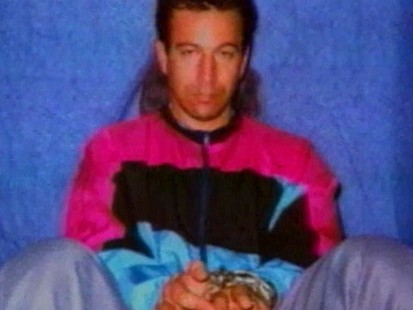
As you may know, today marks the 10th anniversary since Daniel Pearl's death. Pearl was a Wall Street Journal international correspondent, who broke many stories around the world, including an incident where a US airstrike on a supposed weapons factory in Sudan actually hit an aspirin factory. In early 2002, he was sent to Pakistan to search for al qaeda moles in the Pakistani government, was subsequently abducted by one, held for demands from al qaeda, and then murdered by beheading.

When I learned of this act in depth, it was the barbarism of the acts that made me so mad about it. It was a feeling of simultaneous anger and disgust at the act. You know how he was killed? He was decapitated (head cut off), then chopped into ten pieces, and thrown in a ditch someplace in Pakistan. What other word is there for an act like that but pure animal savagery. It's just a horrible thing to do to anyone of any nationality. When I hear about groups like al qaeda carrying out acts like this against people doing their job, I almost understand the kind of guttural anger that drives people like Dick Cheney to want to bomb countries out of existence, or Rick Perry to have criminals executed, even if they are in fact innocent of murders.

It's not that I would ever do these things, or condone them, in any sense, it's just that sometimes, events in the international arena of news sometimes make you so upset that you do get to that point. You do get that level of intense anger, terror, despair about your species, cynicism, a thirst for vengeance. It can be (and sometimes has been) so overwhelming that it scares you. It scares even me how much of that emotion I have sometimes.

This is not the first time I have given issues of an international scope much thought. I came of age, spent my preteens and teens, in a world shadowed by the spector of terrorism. On the morning 9/11 occurred, I was 11 years old, overwhelmed at starting the 6th grade. So it isn't like I've had much choice in what I've become aware of. In past decades, like the 80's or 90's, you could get away with having little or no opinion in international strife and conflicts, because it didn't have a tangible effect on people's lives here in the US. On that Tuesday morning in September 2001, that perception ended abruptly and shockingly.

Since that day, I've felt like there has been a progressively more urgent nature to what happens to people in other countries. So this issue has been on my mind a lot over the years, even though I am still very young. Since I came across this information on Daniel Pearl, I was looking for a way, in my art, to deal with it. I know that won't have an effect, but it will help me express how I feel about this whole issue. Hopefully, just my sharing it with you will have some small effect.

On the one hand, as I said, I do have that anger and fear, but on the other, I do care about other nations, countries and cultures. I want to protect the people of America and the West, but I also don't want to see people on countries like Afghanistan, Iraq, or Iran, shredded, incinerated, then written off as "collateral damage." Sadly, a flipside of our American optimism is this our blindness to the damage our foreign policies, and wars, can cause. If we are an exceptional country, surely we could never kill someone who didn't deserve it. So I get that there are bad people abroad, but I also think we need to take a look at our own soul.

For a while, I racked my brain to try to come up with a way to express this. The phrase "terrorism hurts everybody" went through my mind, but I wanted to come up with a picture that represented it. That is how I express what I find through art best. I wanted to draw up an image that got at the universality of having life ripped from someone you care about. I got the idea to do this drawing.


I was inspired to do this from the Pan Am Flight 103 bombing. On the night of December 21, 1988, the plane, Pan Am 103, was blown up as it was heading from London to New York City. Everybody on the plane (259 people) was killed horrifically, and when the plane hit the ground, it destroyed several houses in the Scottish town of Lockerbie, and 11 people in Lockerbie were killed. The attack was carried out by two Libyan Intelligence agents, one of whom was imprisoned, later released and returned to Libya. There is also good evidence, from official sources, that it was planned within the Libyan government.

Again, the horrible, terrifying way those people were ripped from their lives is gut wrenching. Hearing of it makes it all the more distressing that the perpetrators "got away" and one was sent back home. Again, I had dark thoughts about what I would like do to inflict pain on the people resposible, only to try to take them back soon after. In one account I read, they reported that some christmas presents that the plane was carrying back to the US lay smashed in Lockerbie. That heartbreaking image really stuck with me.

So I decided to make this image as broadly applicable as I could. I wanted it to be about the feeling of a loved one ripped from life. Just the shock, horror, and pain, is something that unites us all. I decided to make this a jarring image of the keychain of a close love falling out of the side of the plane into the darkness. I included the jettisoned christmas present alongside it. This makes it about what terrorism really costs us: people we love, care about, or know. People who don't deserve to be a victim of political or religious hostility. Thus, it applies beyond just the bombing of Flight 103, or terrorism from the Middle East.

It becomes about us all. What do we lose from terrorism? We lose fellow human beings, we lose humanity. By the way, the majority of victims of Islamic terrorism are themselves Muslims. 30 of the victims of September 11th (a full 1% of them) were Muslims, including people on the flights to Los Angeles, and Firefighters, Police Officers, and Paramedics in New York.

Listen to this beautiful video, done by Queen Rania of Jordan, about victims of terrorism who live in the Middle East and pratice Islam.


This inspired me to make this more of a universal statement. That's where I came up with the statement "Terrorism Hurts Everybody." While focusing on this "clash of civilizations" that has claimed many lives, we lose sight of those things in common that give us our humanity. We need, therefore, to reclaim this sense of common experience across borders or cultures. We need to understand that when one act of violence is carried out, someone always suffers, lives with pain for weeks, months, years afterward.

To return to my starting point, Daniel Pearl was killed because he was doing his job. He was doing his work one day, and then he got killed in this horrible way. The same could be said of nearly all other victims of contemporary terrorism. It's just that his job was to highlight goings-on in the world few of us ever encounter. His job may be one of the most crucial in this world.

Thankfully, his death was not for nothing. Now our world is getting more and more interconnected, in an economic sense, in a communal sense, in a cultural sense, in an ethical sense. This is made possible by technology like the laptop I am using right now, and the IPhone I currently own. What is diclosed in Washington DC, can now be passed on to journalists in Europe, and can launch an uprising in the Middle East.

The good thing about this interconnectedness is that it makes it much harder for us to kill indiscriminately. At the same time that technology is bringing us farther apart, it is bringing us closer together. Now our humanity is being brought to bear, as cultures around the world are not as far apart as they used to be. I do not believe this is the end-all-be-all of what needs to happen on Earth, but I do think this is the beginning. The beginning of a journey that needs to happen.

Well, more on the subject of 9/11 in the next post. I was thrilled to finally get to see Extremely Loud and Incredibly Close last Saturday night. I would have blogged about it sooner, but for the last few days, I have been tied up with homework, already, yes. I'll have that for you tomorrow.

See ya, and keep wondering, folks!