Works of Art. From me...To you
From the micro to the macro world, my artistic creations are here for us to discuss, take in and enjoy.
Showing posts with label Creativity. Show all posts
Thursday, July 26, 2012
Senseless Evil
Hello fellow seekers of truth and life,
Well, by now, we've had a few days since the horror unfolded in Colorado early friday morning. Normally, I don't like to do topics right after an event just for the sake of being topical and up-to-the-moment. Certainly, as with anything of this awful nature, everyone and his brother is giving their opinion on it, and I don't think just giving an opinion would be worthwhile. I believe this culture of disaster media has gone way too far in giving out all the details and tidbits of the crime, and we need to give the victims space. That said, there are a few reactions I have had in the days since, and I think they merit me putting them up here, and you reading them.
First off, we (my family) had relatives of ours come in from Colorado the last few days. I wrote an email to them that said that between the fires, and this, Denver has not had a good year. Add to that the heat wave and drought that nearly all of the country has been experiencing, and life in this country has been tense this summer. Sadly, this is the second time they've had a mass killing of this type. The sad thing is, there have been so many shooting sprees since. The only worse thing than how shocking this is, is how unshocking tragedies like this have become. In just the last 5 years, there have been mass shooting and killing sprees in Virginia Tech, the University of Alabama, Fort Hood, Texas, Oakland, California, and, of course, Tucson, Arizona, as well as the terror killings in Norway a year ago. I'm sure there's some that I can't remember right now, and we're not even talking about the infamous Trayvon Martin death this late winter/early spring. Just last Fall, a crazy guy walked into a beauty salon down in Seal Beach, close to where I live, and killed 8 people, and wounded 1.
In the aftermath, people search for meaning to this tragedy. This is only a human thing; we all want the events in our lives to have meaning. This is what distinguishes humans from animals without higher brain function. So it stands to reason that people would look for an explanation, an easy answer that people can latch onto, and act on. I'm sad to say, I don't think there are any simple or easily explanable answers to events like this. I've been racking my brain for many years about what causes people to be so senselessly cruel. I haven't had an answer. I don't understand what kind of madness would drive a person to do this horror, and to be honest, I don't know if I want to understand it, because that would mean that I could conceive of such horrible corners of the mind and heart. I don't have the stomach for that.
Predictably, political factions both left and right are framing this with their own answers on the issues. On one side, you have the reflexively pro-gun guys. No amount of guns is too much for their liking, any kind of gun will do. They'll argue that our Second Amendment Rights are being infringed. They argue that if only we all had the right to either concealed-carry or open-carry gun laws, we'd all be safe. To be honest, I'm sick of hearing people say "If everyone had a gun, there'd be no criminals." They use patronizing, simplistic slogans like "Gun control means using both hands," "When you make guns criminal, only criminals will carry guns."
Apparently, the few states that do not allow you to take a gun anywhere and everywhere, and shoot someone for any reason, those states are now infringing on the essence of our freedom. Because we know how well you will be able to see the perpetrator in a panicked, fleeing crowd. What if 30 other people all pull their guns, too? Will they all be able to tell who the original deliquent gunman is? What if the cops show up? How will they know who the bad guy is, when there's just a whole bunch of people shooting at each other?
In this culture we assume that weapons equal safety. That's only true in the same way that drugs make you happy. In the beginning, you get the high of power and control, respect and safety. There will come a day when one gun is not enough to scare off or kill all the bad guys, because they've got guns too, so you need more guns, more powerful ones, but they get more guns, and so you need tasers and poison gas to really keep the bad guys at bay. It becomes an arms race, a quest to demonstrate ever-growing power. At that point, your weapons become property that also needs to be protected. The hope of being able to shoot your problems away can only last for so long.
We all have this fantasy that if only we could pick a gun, we could be a cowboy and go in there, shoot the bad guys and put a stop to it. This idea stems from the time we're kids. What are we told to do with a bully? Punch his lights out. That way, he'll never harass you again. After all, a man takes care of his business, so it's only natural that we assume that superior force equals superior strength. Not only does this have holes in it, but it reinforces this blame-the-victim ideology so prevalent in our culture of "the self-made man."
It's as if you deserve to be killed if you can't shoot back. I also have no use for this lethargic argument, made by both the right and left, that it won't really do anything to have any limits on gun purchasing and who can own guns. As if, "We can't stop every bad person from getting guns, so let's not even try." Having some limits won't stop every bad person from getting a gun, but will it stop a lot of crazy people from getting guns that shoot 50 or more bullets at a time, allowing lots of people to be killed? Yes.
By the same token, there is the other side that calls for more gun regulation. They say that assault weapons can't be used to hunt (unless you're hunting a 25-foot-tall elk that can only be taken down with 50 rounds), and therefore guns need to be gotten off the streets. They tell you the chances of someone breaking into your home are very small. So the solution is to make it illegal to buy them if you can't meet certain criteria. Most of them are on the losing end of the argument, because they're dealing rationally with an issue that is not a rational one. It's not about guns, it's about having the power, authority, protection and control over your life that owning a gun represents.
This is why I have come to realize that arguments over gun laws and regulations are just missing the point. Do yourself a favor: watch the above video, and ponder most of the media discussion on the Aurora shootings. What are they talking about? What could they be talking about, but aren't? Also, if you're in a more edgy mood, you could watch this video, which makes the same points in more vulgar terms:
Though I beg to differ with some of the points this guy made, it did get me thinking deeper about the issue. Is it really about guns? Is it really fair to assume that guns are inherently destructive, insane, or evil? Are they to blame for all the violence and destruction in the years since Columbine? Or is it that the killers have this drive to cause pain and destruction? Even if we were somehow able to make it so that no violent criminal could get a gun, they would find some other way to hurt, maim, or kill the person or people that they hated, or kill for some nihilistic sense of control in an often unpredictable life.
Guns are really a tool. A gun has no determination in whether it will kill, or whom it will kill. Nor does a canister full of serin nerve gas, or a drone bomber. The decision has to be made by a human with control over the tool. Now, unlike many other things you could use to kill a person, a gun is only designed for that purpose, nothing else. Referring to what this man said above, Licoln Town Cars are not trafficked by dealers to places like Syria or Colombia for the purpose of killing and fighting wars. I couldn't throw 50 knives into a crowd of people and kill 50 or more people doing that. If you picked up a hammer and decided to bludgeon somebody to death, it would take a minute or so, if you were able to work quickly, and if the victim hung around long enough. There's only one thing that is designed to kill a mass number of people, at close range, as quickly as possible, and that is a high-round automatic.
Having said that, to argue that guns are the only problem here, and that if only guns weren't around, we wouldn't be killing each other is a simplistic argument. Moreover, it distracts us from the other part of this problematic equation, the part that happens before the gun and bullets are acquired. This relates to what I said earlier about this kind of madness. Even thuogh we don't know the level of it that would make finding a weapon and killing several people in a movie theater, we need to understand a few things about it.
When faced with questions like this, we also hear a lot of talk about violence in entertainment and media. You hear a lot of people say "Oh, movies and video games are so violent these days. They're causing our kids to be more aggressive." Actually, mass communication scholars back in the 1970's came up with a theory that a greater danger was that people would believe that the world was a scary, dangerous place. So sure, some wackos will copycat violent acts they see in the movies, as Holmes did, but most people will just resign themselves to it.
This relates to our culture's role in all this. Why do all these massacres happen? Is it the guns? Is it violent movies or video games? Is it the bad economy that's forcing people out of work and home? Is it mental illness? All of these things could push you closer to the breaking point, but none of them is enough to make a person a killer (even all combined). Based on some things I've seen, I posit that it is about five things.
First, the fact that, as I mentioned, our entertainment, news, and the attitudes of our friends foster suspicion of others, and other groups. Second, we tend to be very defensive about our property and status, which necessitates violent retribution to "wrongdoers." Third, we tend to believe superior force equals superior strength (and thus moral strength). Fourth, we have no education on how to solve our anger without beating the other guy down. Fifth, and perhaps most crucial, we have an imminent sense of threat. That last one may be the igniting factor among all the other "push" factors.
Those are just things to ponder. Don't take this at face value, though. Take a walk through any town in the US, talk to people about dealing with violent criminals. Chances are, you'll see these assumptions surface. Now, I titled this post Senseless Evil. Invariably, when some horrible tragedy like this happens, we wonder how there can be any justice (or a loving God) in the world. We wonder how a person could do such cruel, evil acts.
People then say "Oh, they're just evil people." I, however, believe evil is about what you do, rather than who you intrinsically are, or are believed to be. It's about the choices you make in life. It's whether you give in to the darker, baser parts of your psyche out of weakness, cowardice, or ignorance, or whether you allow it to pass. So the only thing I can leave you with is, just make the sensible, fair, wise, morally strong choices in your life. Don't be afraid to take some time, or ruffle some feathers, to figure out what those choices are. I'll have more material for ya soon!
See ya, and don't forget to live!
Monday, June 25, 2012
Tribune to a Genius: 7 Things I Learned from George Carlin
(An interview of George Carlin by Tim Russert in 2005)
Hello Fellow Seekers of Truth and Life,
I want to talk today about a figure who has influenced my creative life in a profound way. I remember the first time I heard George Carlin's material. I had just turned 18, and I found lots of points in the material. However, his material got very violent, which often disturbed me. I am the type of person who just hears about and sees horrible events happen in media and news, and it scares me, makes me mad or sad. It was almost as if listening to it too much would bring the catastrophes he was talking about into being. So I decided to give listening to Carlin's routines a rest.
Two weeks later, I was visiting my grandmother in Virginia. She had the TV on one Sunday morning, and the newscrawl underneath proclaimed that George Carlin was dead at 71 in Malibu. I remembered that was the same guy that I had been alternately amused, inspired and taken aback by just two weeks earlier. Although I didn't think much about it at the time, it turned out that this man's 50-year body of work would help give my ideas a framework, a means of expression that I hadn't known was possible.
First of all, the reason I am writing this is because we of the anniversary. Not only was this past Friday, the 22nd of June, the fourth anniversary of Carlin's death, but it would have been his 75th birthday. I meant to write this on Friday or Saturday, but it just got so hectic around here that I had no time until this afternoon to write. There are many passages I could write about the life and work of the late, great George Carlin. For simplicity's sake, though (or so I don't bore the hell out of you), I will make each of my main points in one of the following seven bullet points.
Here is my list of seven things I learned from George Carlin. To pay tribute to the common comedic form, I will present them from last to first.
7. Language is an amazing thing, have fun with it. Have you ever taken the time to take apart a word, and then wondered where it came from? The fact is, every word is an interesting and unique concept that came from somewhere. Language is something only humans can use and understand, it is the reason we don't spend all day grunting at each other.
Allow yourself to notice, and be amused by, the ways that words and concepts line up, contradict, make sense, don't make sense, sound similar, sound different, cover up and reveal things. Now if all this sounds too academic for you, remember that Carlin, the guy who took all of this language play into new territory, dropped out of school in 9th Grade. Clearly, you don't need to be an academic to do this.
To give an example, just yesterday, I was grocery shopping, and I picked up a bottle of Extra Virgin Olive Oil. This name baffled me. First of all, what does the term virgin even mean in this context? Is it uncured, unsaturated, not heated up? And second, have you ever come across a bottle of virgin olive oil, because I never have. Your only choices in the grocery store are olive oil and extra virgin olive oil, which leads to the third point. What does the extra virgin mean? I always thought that something could be either virgin, or not virgin. There aren't degrees of virginity, it's something you have or you don't, it's that simple. My grandfather first brought the term to my attention, but it is little phrases like this that George Carlin made we who listened notice.
6. It matters which word you use to describe an object or concept. Whatever you may believe, the words you use actually do matter. One of Carlin's running themes was his love of tearing down euphemistic language. When some idea or thought makes us uncomfortable, we try to soft-pedal description of it, so we don't experience the full brunt of what is happening. This is a natural human urge, we want to protect ourselves from the idea of harm. Often, we also want to ignore the idea that we could be wrong.
While this is a natural urge, it does us great harm. It is dishonest, and it hides us from dealing with life as it is, and often, it keeps us stuck in a place that may feel comfortable, but robs us of life force, insight and genuine compassion. For instance, we love to say "I'm getting older," rather than "I'm getting old," because we don't want to face the fact that we will grow old and die too. Such a thought shocks and frightens us at first, but it could also help us treat others with honesty and decency. After all, if we are going to die, too, that means everybody else will die at some point, so we share this "marked" fate, terror, and sadness with everybody else.
I'll give you a macro-example from the Carlin files. After World War I, soldiers would experience a condition of terror, anguish over past battles, regret, and a mental fraying over what they had seen and experienced. This was called "shell shock." A simple name, that told you what you needed to know, with vivid language that gave you the sensation. After World War II, the same state was referred to as "battle fatigue." That name seems to hurt less, like you just need a good night's sleep for it. Then after Korea, it was called "operational exhaustion," a highly mechanical term for a human condition. When soldiers were coming back from Vietnam, they got "post-traumatic stress disorder." This word dilutes the original meaning with several superfluous academic terms, when "shell shock" works just as well.
In fact, such a convoluted term hides a key reality of war from us. Even if you survive a war, it takes a toll on your psyche. I'll always remember one line of Carlin's: "I'll bet if they were still calling it shell shock, a lot of those Vietnam Veterans would have received the attention they needed." Think about the soldiers coming back from Afghanistan and Iraq now. What do they have? P-T-S-D. Now they don't even bother to come up with names anymore, they just give it a meaningless collection of letters. Since about the mid-1990's, our language has gone progressively more and more toward abbreviation. This is an example of how dangerous it can be.
5. Producing violent media doesn't make you coldhearted or cruel. As I mentioned above, I was initially turned off by Carlin's repeated wishes for people's deaths. As I grew, I also grew to dislike movies that were excessively gory or violent just for the sake of being excessively gory or violent. This made life tough when everyone around me was thriving on movies like 300 or Inglorious Basterds, and playing war-themed video games, while these were a big turn-off for me.
However, Carlin was different in that he didn't mind if carnage happened closer to him, where there was a chance he could be hurt or killed. I later saw this and understood the conscious nature of what he was saying, and the conscious nature of the audience's laughing in approval. While it still scared me that people could be so blaze about such material, I knew that the intent behind it was to call our attention to something. There was something inherently violent and ignorant in our human societies, particularly in the United States.
Remember this segment from Michael Moore's Bowling for Columbine? This had to do with the scapegoating of violent media and video games in the wake of that tragedy. The reason I included it is this discussion of whether violent entertainment is really the boogeyman everybody claims it is. The fact is, there has always been some sort of violence and cruelty out there. Are supposed to just not talk about it, and hope that'll make it go away? Carlin spoke of the dark urge to see someone hurt in people. If we don't address that, how will we ever move forward.
Whatever you may think of Manson or his music, listen to the last thing he says."I wouldn't have said one word to [the Columbine victims]. I would've listened to what they had to say, and that's what no one did." The people you hear on TV are constantly telling you how to think, and what to do. When you get hurt, in a small- or large-scale way, there is always someone there telling you what to think and do ("You need this product," or "Violence is rampant, and this group is to blame"). This is all to sell a neat narrative about the world, that you must always accept. Because of Carlin, and what Manson said above, I don't think the problem is violent songs, comedy routines, or movies themselves. I think the issue lies in intent. There is being shocking to pander and boost sales revenues, and then there is being shocking to prove a point, and offer insight, which I will talk about in the next point.
4. Take the things that piss you off, and convert them into creative insights about life. You may have noticed a lot of "angry rants" on this blog of late. Believe it or not, I think anger can be very productive for solving problems and helping people in pain. The problem is that people rarely deal with anger in a positive way. Most of the time, people deal with it in the most destructive way possible, by choosing scapegoats, rallying around "heroes" pinning all the bad in the world on the scapegoat, and then taking out their anger on them.
Unfortunately, people either handle anger this way, or cut themselves off from the anger entirely, trying to deny or destroy it. Another way would be to look at the anger, and keep asking "What is behind this?" You could explore what it is about the things that bug you or make you angry. Sometimes it might be insignificant, but other times, there might be something behind it. Carlin routinely talked about things that made him angry, exaggerating the anger for comedic energy, and it usually lead to some insight about life that you hadn't thought of before. Some people were threatened by this, but for many people, including me, this was the insight I needed to grow.
I've lately began making lists of things that bug me. One thing is people with earbuds in their ears all the time. Going to college, I see this all the time, people walking around with those blank looks on their faces, with the damned white headphones in, as if to say "I don't have to pay attention to anything." What bugs me the most is when I see people with headphones on skateboards and bikes. Focusing on this singular annoying thing led me to some creative insights. It led me to think about how people shut down reflexively, was there anything I did that was an easy way of shutting down, getting stuck in my own world. Here, an annoying occurence became an opportunity to reflect and grow. By the way, the things you complain about also apply to you, as I will discuss in a moment.
3. All people are hypocrites, and contradictions in people are a part of life. What was interesting to me is that George Carlin's career grew out of anger toward the Vietnam War, and the culture of Reagan, where it became good to do evil and evil to do good. However, Carlin was not kind toward the people in the government, the corporations. He hoped they were hurt-the same thing he attacked them for doing. As I watched his material later, I saw he was also lashing out at causes and groups usually defended vigorously by the Left of the 60's. Earlier in my life, I had believed that you had to support one set of ideas or another, but this changed my mindset. I realized that my own gut feelings mattered, and I shouldn't ignore them, or try to stuff them into a conventional wisdom box.
I had also assumed that because Carlin had this rough-edged, biting persona on stage, he must have been just bad to everyone he met. Not true. At least, not according to his memoir (which was transcribed by a friend of his after his death). In his memoir, he had only positive things to say about his fellow comedians at the time, and often worked with them anonymously to help their careers. He certainly said what he felt at a gut level, but some of it was brutal, some of it was very insightful. It was all very genuine. I also learned how to disagree. You don't have to accept or reject some point of view across the board. I used to believe that people had one persona about them, and that was what guided their life. I now know that what we say, and what we do, think and feel, often contradict each other. I have begun using this as a part of my life, rather than rejecting or trying to bury it.
2. Beneath race, gender, class, religion, nationality, et. al., there is a common experience we all share. You may have noticed that under labels, I will often include the phrase common experience. This is what that refers to. I don't know a great way to describe it in words better than this: there are things in life we all have to go through, trials, joys, heartbreaks, and most importantly, those little awkward moments, and the little things you succeed at that make you go "Yes!" Let me let the late, great Mr. Carlin do the explaining.
Truer words have not been spoken.
1. Life isn't nearly as serious as it pretends to be. In life, there are many things, concepts, ideas, entities and processes that pretend to be so important, the most important thing in the world, in history, ever. They aren't. Part of Carlin's buzzsaw approach was exposing life, particularly human life, as a game. We really aren't as important, noble, or paramount as we make ourselves out to be. There will come a time when everything that is here now is dust, invisible particulate matter floating around somewhere. The room you are in, the laptop or phone you are reading this on, your house, your body, all of your possessions, all of that will disperse, and the same is true of me. It's a scary thing, isn't it? It often scares me.
However, our egos have become so inflated by the things of the world that we believe we are the only important thing. What can bring us up, can also tear us down, so the highs and lows of our lives lead to the same illusion of importance, permanence. What George Carlin did was to tear down this idea that human well-being is paramount. Ironically, this urge came from a deep, deep anger over the injustice faced by many people, and it led to many people, including myself, actually discovering something in life. George Carlin once said that each person, by him or herself, is an amazing thing, but once they start to form groups, that's when the bullshit starts. Beneath that statement lies lots of truth. There has never been, and will never be again, something that replicates you. It is imperative that you realize both that you are not as important as you believe, and that you can discover more than you ever thought possible.
This is why I wanted to pay tribute to the late, great George Carlin on what would have been his 75th birthday. Because he took comedy into a whole different dimension. He used to to make us realize things that you couldn't just tell a person. If you tried to tell them, it would end up a confusing mess. If you use humor, that opens people up, and that gives them an experience they can remember, and they can think back and realize, "I had never heard that before." This is what I hope to do with you, dear reader, of this blog, in my own small, humble way. If I can give you that, and you take that gift, open it, and are amazed by what is contained inside, then this blog is worth all the work I put into it.
I'll have more good stuff for you to sink your teeth into soon.
See ya, and don't forget to live!
Saturday, June 2, 2012
The Artistic Response to Group Hatreds
Hello Fellow Seekers of Light and Truth,
Well, I've found yet another thing that pisses me off. I'm gonna have to add one more thing to this list. I know that I can't focus too much on anger, and that I've got to be positive. I know this, I understand this. However, I cannot sit idly by while wrong is done. This time, said wrong is especially insidious and horrible, because it is packaged as "truth," and "virtue," and "religious freedom," and "family values," and then taught to children as gospel truth. Here, the children who are victims become the villains.
You might have come across this video. It comes from Greensburg, Indiana, from a church called the Apostilic Truth Tabernacle. The sickest part of this video is the orgy of applause that the adults, and how they egg the kid on after he is done gleefully exclaiming that 10% of the population deserves to DIE and GO TO HELL. This is the kind of vile public attack on a group usually reserved for Taliban country, or some hideous fascist regime from the 30's, where the Jew was the predator that was corrupting our fatherland. And don't try to argue on this point because, Oh, they're not calling for anyone to be killed, or They don't hate anybody, they just don't want their kids to think it's okay.
First of all, even if this group hasn't called for anybody to be killed, others have called for it. Listen to Pastor Curtis Knapp from Seneca, Kansas's New Hope Baptist Church.
What sickens me the most is that these men bully, berate, and demonize an entire population, and then they run and hide behind God and Scripture. They don't even have the courage of their convictions to own their hatred and prejudice. While seeing the child's glee is sickening, it is ultimately the adults who are the most at fault. It is the preacher for denying his own insecurity, and flawed nature, by condemning innocent human beings to death, damnation and public contempt just because of who they are driven to love and marry.
This is another truly disturbing video, shown on Saudi TV. If you'll notice, the 3-year-old girl is spouting the same ideas about Jews' alleged guilt as have been used through the millenia to rationalize pogroms, barbarian attacks, and ultimately the Holocaust. This hateful ideology, once again, sung sweetly into the innocent ears of a child, makes me feel nothing but rage. Rage because I know where this leads. This leads directly to genocide, it happened in Germany, it happened in Kosovo, it's happened without much notice in many other places.
I have to be honest, as I watch this kid sing, and as I see the adults riotously applaud, there's an animalistic part of my brain that wants to go, and punch and kick everybody in that audience. The only thing that sickens me even worse than seeing a person hurt, is seeing injustice, cheered and affirmed as righteousness. I used to have a big problem with anger, and sometimes I still get overwhelmed by it. I would only hit another kid in anger, hard as I could, then I would feel really bad for him when I saw him in pain.
There is something visceral about the anger I have when people cheer the beating and attacking of the helpless, the innocent, the righteous. This is just as much violence against a people as going and lynching them. Remember Tyler Clementi, two years ago? He was the Rutgers Student who was outed having a gay affair by his roommate, and then killed himself because he was embarrassed by his peers. They gave the roommate a joke, slap-on-the-hand sentence. Here, the humiliation, the damage, and the no doubt the permanent demonization in the minds of some of his classmates is the key component of the violence done to him, that destroyed him to the point where he felt only death would save him. As far as I'm concerned, if you cause that to happen to a person, you are directly responsible for his death.
I might have told you this, but I first read the book 1984 when I was 15 years old. It was a dark, confusing time in my life. I deeply identified with the struggle against a great tyrannical order. What was even more terrible about this, was that they had the people in their minds and hearts, the people who would surely know this was not just, fully believed that it was the only justice. Even the protagonist was defeated in his own mind and disowned himself, giving himself over to the lie. For a while, because of this, I lost faith in humanity. If we could be conned and taught to embrace such evil, what hope was there? We are all guilty, no matter what our nationality, religion, or societal structure.
Later, I began to learn about Eastern spiritual principles. What has stuck with me about these is that they de-emphasize the doctrine of it, and are more in tune with the flow of life itself. I later came to realize that it was the doctrinal, rhetorical emphasis that lay at the roots of this collective sin, at the risk of getting religious here. When I reviewed literature on Orwell's life and work, five years later, for a review of literature I was doing for Comm. Studies, I realized that what he was attacking was the lock-step behavior of people when they gather in groups.
Groupthink is a term that's come to be used often because of Orwell's work. I've come to use it often myself. Here, we need to ponder a lot about what it means, because I believe it holds some answers. What it means is when people get into groups, their collective behavior and thought process tends to focus on the group's preservation, rather than individual well-being or ethics. In other words, it becomes about how do we win rather than how do we care for each other, and what is the best for everyone. 1984 was an extreme example of this, but the disturbing thing is, all societies embrace this groupthink to some extent.
Think about why the parents gleefully taught this kid to desparage "the homos." It was because, at this church, the doctrine says that gays are evil. That's what the Minister preaches. It is similar to the "two minutes hate," shown in 1984, in that it trains the churchgoers to hate them as the sinners from whom all of the world's problems originate. Then they are trained to praise a "hero" who destroys the "villain," in this case, the child who is taught that when he damns people with his words, he will be rewarded, affirmed. Let's not be ambiguous here: this is violence. This is the reason so many gay, lesbian and transgender kids are killing themselves. This social torture makes them feel so rotten about themselves. When you are told you are worthless, dirty, and evil over and over again, you begin to feel dead inside, to internalize the pain.
So why would I be talking about all of this on an arts blog? Over and over, I have thought about what I would say to the question "Why do you get so political on an arts blog?" Well, as I have alluded to, I used to be much more overtly political and ideological. In fact, not long ago, I thought about getting into politics myself. I was always tense, on edge back then. I would spend hours arguing with points of view in my mind. This made life less enjoyable and more tense and argumentative. Long story short, I realized that there was something about the human experience that I saw, that demanded more than just political activism and struggle. In the last few years, the times when I have learned the most about how to heal people, is when I have explored life without judgement, with a creative eye.
The above video is from a year and a half ago. Joel Burns, a Gay City Councilman from Fort Worth, Texas, decided to give this speech after a rash of young gay kids commiting suicide, just to assure them that they were not alone. Listen to it, please. I couldn't listen to it without tears welling up. It's just a human reaction, I think. This crystallizes what my approach to issue-tackling has been over the last two years. It has to do with working from the experience we have in common, rather than the doctrines that make some good and others evil. Here, kids learn, again, from groupthink strategies, that the only way they can be accepted is for them to either ostracize, humiliate, or physically destroy some kid just because he looks different.
What this blog is about is the experience of life. The heartbreak, the love, the pain, the violence, the redemption. That is why I am talking about groupthink now. It inhibits us from owning our own life experience. We feel like we have to sell ourselves to feel liked, secure, complete. We can't claim our own experience, instead, we are subconsciously taught to hate ourselves in a variety of ways. You know, one thing I was shocked to learn is that when you watch an ad, 90% of what you take in is on a subcoscious level.
This process of melding our groupthink through ads, TV shows, movies, even stories we tell each other, does intense damage to people who are attracted to the "wrong" sex, but I believe it is not just limited to gays. Like I said, I have always loved girls, but what I find distressing is that, when boys get interested in girls, there is a certain unwritten script they expect you both to follow. The girl is expected to be the needy, emotional one who needs protection, and the boy must be confident, able to throw down at all times to protect her, and absent, except for sex. I realized early on that the script wasn't going to work for me. I came to want romance with girls, but something has always bugged me about the blind obedience people have to this way, and the condemnation you face if you ever stray from it.
I could give endless examples. The point is, groupthink kills our potential as human beings. What we need is to find our own way, and find attachments to people and groups that differentiate, in other words, they set boundaries so that we can stay free from the echo chamber that produces prejudices and hatreds against outsiders. We must learn to do this so that our children learn that NO group is sinful or evil by nature of is being different. In order that our children grow up to realize their full potential to live with others, and not claim the contempts of their parents as God's will, remember what I mentioned in the Bully post, the guy who said "Let he who is without sin cast the first stone."
Undoubtedly, some will interpret this to mean that God is without sin, and therefore, God is expressing his hatred of these groups through Christians' discrimination. To me, it means that none of us has the authority to universally condemn another group as intrinsically evil, for the same sins they possess also exist in us. We all have potential to bad, but we are not defined as creatures of sin. That's the main qualm I have with Christianity; all it seems to see is our bad. We need not be defined by our baser tribal instincts, though.
Well, I'll leave it at that for now. Undoubtedly, I'll talk more about this at a future date. I saw this, and as I said I got so angry about it that I decided to convert my angry energy into creative work. It is the same principle I used in my post on Newt Gingrich. So, anyway, I'll have some more good material for you soon.
See ya, and don't forget to live!
Well, I've found yet another thing that pisses me off. I'm gonna have to add one more thing to this list. I know that I can't focus too much on anger, and that I've got to be positive. I know this, I understand this. However, I cannot sit idly by while wrong is done. This time, said wrong is especially insidious and horrible, because it is packaged as "truth," and "virtue," and "religious freedom," and "family values," and then taught to children as gospel truth. Here, the children who are victims become the villains.
You might have come across this video. It comes from Greensburg, Indiana, from a church called the Apostilic Truth Tabernacle. The sickest part of this video is the orgy of applause that the adults, and how they egg the kid on after he is done gleefully exclaiming that 10% of the population deserves to DIE and GO TO HELL. This is the kind of vile public attack on a group usually reserved for Taliban country, or some hideous fascist regime from the 30's, where the Jew was the predator that was corrupting our fatherland. And don't try to argue on this point because, Oh, they're not calling for anyone to be killed, or They don't hate anybody, they just don't want their kids to think it's okay.
First of all, even if this group hasn't called for anybody to be killed, others have called for it. Listen to Pastor Curtis Knapp from Seneca, Kansas's New Hope Baptist Church.
What sickens me the most is that these men bully, berate, and demonize an entire population, and then they run and hide behind God and Scripture. They don't even have the courage of their convictions to own their hatred and prejudice. While seeing the child's glee is sickening, it is ultimately the adults who are the most at fault. It is the preacher for denying his own insecurity, and flawed nature, by condemning innocent human beings to death, damnation and public contempt just because of who they are driven to love and marry.
This is another truly disturbing video, shown on Saudi TV. If you'll notice, the 3-year-old girl is spouting the same ideas about Jews' alleged guilt as have been used through the millenia to rationalize pogroms, barbarian attacks, and ultimately the Holocaust. This hateful ideology, once again, sung sweetly into the innocent ears of a child, makes me feel nothing but rage. Rage because I know where this leads. This leads directly to genocide, it happened in Germany, it happened in Kosovo, it's happened without much notice in many other places.
I have to be honest, as I watch this kid sing, and as I see the adults riotously applaud, there's an animalistic part of my brain that wants to go, and punch and kick everybody in that audience. The only thing that sickens me even worse than seeing a person hurt, is seeing injustice, cheered and affirmed as righteousness. I used to have a big problem with anger, and sometimes I still get overwhelmed by it. I would only hit another kid in anger, hard as I could, then I would feel really bad for him when I saw him in pain.
There is something visceral about the anger I have when people cheer the beating and attacking of the helpless, the innocent, the righteous. This is just as much violence against a people as going and lynching them. Remember Tyler Clementi, two years ago? He was the Rutgers Student who was outed having a gay affair by his roommate, and then killed himself because he was embarrassed by his peers. They gave the roommate a joke, slap-on-the-hand sentence. Here, the humiliation, the damage, and the no doubt the permanent demonization in the minds of some of his classmates is the key component of the violence done to him, that destroyed him to the point where he felt only death would save him. As far as I'm concerned, if you cause that to happen to a person, you are directly responsible for his death.
I might have told you this, but I first read the book 1984 when I was 15 years old. It was a dark, confusing time in my life. I deeply identified with the struggle against a great tyrannical order. What was even more terrible about this, was that they had the people in their minds and hearts, the people who would surely know this was not just, fully believed that it was the only justice. Even the protagonist was defeated in his own mind and disowned himself, giving himself over to the lie. For a while, because of this, I lost faith in humanity. If we could be conned and taught to embrace such evil, what hope was there? We are all guilty, no matter what our nationality, religion, or societal structure.
Later, I began to learn about Eastern spiritual principles. What has stuck with me about these is that they de-emphasize the doctrine of it, and are more in tune with the flow of life itself. I later came to realize that it was the doctrinal, rhetorical emphasis that lay at the roots of this collective sin, at the risk of getting religious here. When I reviewed literature on Orwell's life and work, five years later, for a review of literature I was doing for Comm. Studies, I realized that what he was attacking was the lock-step behavior of people when they gather in groups.
Groupthink is a term that's come to be used often because of Orwell's work. I've come to use it often myself. Here, we need to ponder a lot about what it means, because I believe it holds some answers. What it means is when people get into groups, their collective behavior and thought process tends to focus on the group's preservation, rather than individual well-being or ethics. In other words, it becomes about how do we win rather than how do we care for each other, and what is the best for everyone. 1984 was an extreme example of this, but the disturbing thing is, all societies embrace this groupthink to some extent.
Think about why the parents gleefully taught this kid to desparage "the homos." It was because, at this church, the doctrine says that gays are evil. That's what the Minister preaches. It is similar to the "two minutes hate," shown in 1984, in that it trains the churchgoers to hate them as the sinners from whom all of the world's problems originate. Then they are trained to praise a "hero" who destroys the "villain," in this case, the child who is taught that when he damns people with his words, he will be rewarded, affirmed. Let's not be ambiguous here: this is violence. This is the reason so many gay, lesbian and transgender kids are killing themselves. This social torture makes them feel so rotten about themselves. When you are told you are worthless, dirty, and evil over and over again, you begin to feel dead inside, to internalize the pain.
So why would I be talking about all of this on an arts blog? Over and over, I have thought about what I would say to the question "Why do you get so political on an arts blog?" Well, as I have alluded to, I used to be much more overtly political and ideological. In fact, not long ago, I thought about getting into politics myself. I was always tense, on edge back then. I would spend hours arguing with points of view in my mind. This made life less enjoyable and more tense and argumentative. Long story short, I realized that there was something about the human experience that I saw, that demanded more than just political activism and struggle. In the last few years, the times when I have learned the most about how to heal people, is when I have explored life without judgement, with a creative eye.
The above video is from a year and a half ago. Joel Burns, a Gay City Councilman from Fort Worth, Texas, decided to give this speech after a rash of young gay kids commiting suicide, just to assure them that they were not alone. Listen to it, please. I couldn't listen to it without tears welling up. It's just a human reaction, I think. This crystallizes what my approach to issue-tackling has been over the last two years. It has to do with working from the experience we have in common, rather than the doctrines that make some good and others evil. Here, kids learn, again, from groupthink strategies, that the only way they can be accepted is for them to either ostracize, humiliate, or physically destroy some kid just because he looks different.
What this blog is about is the experience of life. The heartbreak, the love, the pain, the violence, the redemption. That is why I am talking about groupthink now. It inhibits us from owning our own life experience. We feel like we have to sell ourselves to feel liked, secure, complete. We can't claim our own experience, instead, we are subconsciously taught to hate ourselves in a variety of ways. You know, one thing I was shocked to learn is that when you watch an ad, 90% of what you take in is on a subcoscious level.
This process of melding our groupthink through ads, TV shows, movies, even stories we tell each other, does intense damage to people who are attracted to the "wrong" sex, but I believe it is not just limited to gays. Like I said, I have always loved girls, but what I find distressing is that, when boys get interested in girls, there is a certain unwritten script they expect you both to follow. The girl is expected to be the needy, emotional one who needs protection, and the boy must be confident, able to throw down at all times to protect her, and absent, except for sex. I realized early on that the script wasn't going to work for me. I came to want romance with girls, but something has always bugged me about the blind obedience people have to this way, and the condemnation you face if you ever stray from it.
I could give endless examples. The point is, groupthink kills our potential as human beings. What we need is to find our own way, and find attachments to people and groups that differentiate, in other words, they set boundaries so that we can stay free from the echo chamber that produces prejudices and hatreds against outsiders. We must learn to do this so that our children learn that NO group is sinful or evil by nature of is being different. In order that our children grow up to realize their full potential to live with others, and not claim the contempts of their parents as God's will, remember what I mentioned in the Bully post, the guy who said "Let he who is without sin cast the first stone."
Undoubtedly, some will interpret this to mean that God is without sin, and therefore, God is expressing his hatred of these groups through Christians' discrimination. To me, it means that none of us has the authority to universally condemn another group as intrinsically evil, for the same sins they possess also exist in us. We all have potential to bad, but we are not defined as creatures of sin. That's the main qualm I have with Christianity; all it seems to see is our bad. We need not be defined by our baser tribal instincts, though.
Well, I'll leave it at that for now. Undoubtedly, I'll talk more about this at a future date. I saw this, and as I said I got so angry about it that I decided to convert my angry energy into creative work. It is the same principle I used in my post on Newt Gingrich. So, anyway, I'll have some more good material for you soon.
See ya, and don't forget to live!
Labels:
Anger,
Breaking Down Anger,
Church,
Common Experience,
Conflict,
Courage,
Creativity,
Death,
Empathy,
Family,
Freedom,
Groupthink,
Homophobia,
Human rights,
Individuality,
Scapegoat,
Truth
Friday, February 10, 2012
First Impressions
Hi there,
The following story comes from something that happened to me once. I can still remember it clearly, and it marked a significant turning point in my social life. After I tell it to you, I will explain the backstory behind it, and why I brought it up. So here goes.
I was sitting in the second row, close to the stage, waiting apprehensively. I was listening to Jessica, the girl on stage, playing her guitar, and singing with a big vocal range. She was using the full sound on the guitar, and her voice really flowed up and down gracefully.
Oh, wonderful! I thought. You mean I have to follow that? With my little comedy act? I was waiting to present my passionate interest to the class. This was the second week of my second Fundamentals of Acting semester. The day earlier, I had an idea to share some of the impressions I did with my brother as my passionate interest. My older brother and I use a lot of impressions and obscure references when talking, which almost makes our communication a dialect unto itself.
When I asked Anna, the course instructor here, if that would be a good idea. She said it would be really interesting to see me do them. Later that day, when reviewing which of my "characters" that I wanted to bring out here, I got this huge smile, thinking about the riffs Drew and I had gone on with various different personalities. I thought of our riffs on Jack Nicholson from A Few Good Men, and my uncle from back east, whom I told you about a few weeks ago. Today, as it would be my turn next to share these impersonations for the first time, I was getting those nervous feelings.
Then Jessica's guitar number wound up, and we applauded, calling our approval of her singing and instrumental skills. Lots of the people in the class had musical skills. Now it was my turn to show my observational and humor skills. As Anna called for me to get on the stage at the front of class, I got that nervousness in my throat. My nerves were starting to go, and my heart was racing.
I stood up at the front of the class, waiting for everyone to quiet down. "Well, this passionate interest is from something my brother and I like to do," I began. "We have all these inside jokes we like to do with each other."
Anna asked if my brother, Drew, was older or younger than me. I told her that it's just Drew and I, and he's the older one. "Now, I can imitate lots of celebrities, actors, political figures, and so forth, pretty accurately. I can't do everybody, but I'll let you know, upfront, if there's somebody that I can't do."
My legs were actually starting to shake now. I compare speaking in public and acting on stage to jumping off a tall diving board. When you're standing up on top of the tower, it looks really scary, but when you jump, and begin falling toward the pool, the fear dissipates. You are just moving, swinging your body and getting ready to go in the water. I had just jumped, and now the fear was blowing up like a firework.
The people in the class were asking me who I could imitate. Benji, one of the guys in the audience, asked me if I could channel Sarah, the instructor we had the previous semester. I paused for a moment, wondering if it was okay to do a caricature of a person I liked. I didn't know if it was disrespectful, or a putdown, to do this. Finally I just dove into it.
"Se, I don't really believe you were laughing at that!" I started off, playing on her energetic pace and motions," You were showing me you were laughing, but you weren't really doing it. You know?" I chuckled a little, as Sarah would do when she said that. This was always how she started off telling us to go deeper into our actions. "You just gotta...fuckin'...go in there and laugh your ass off...like this." Then I threw my head back and laughed with my whole body, much as she would have done to show us. The whole class was laughing by now.
"My brother and I like to go off on all these tangents," I went on, "Like we have all these lines and actors we riff on. Like one time, up in LA, we saw this flag for Google, and we went on this tear about how Google was taking over the world. So we went off on this Jack Nicholson speech from A Few Good Men. So we said," I began my impression of Jack Nicholson's facial ticks, with the eyebrows and forehead, and the authoritative delivery as the bad-ass Colonel in that movie. Watch the speech below here.
"Yes, God Bless Google, son! I have neither the time, nor the inclination to explain myself to someone who lives his life under the auspices of the knowledge that I provide, and then questions the way in which I provide it! I would rather you just said thank you and moved along!" I then went further with the "God Bless Google" line of thought, and added this thought I had recently to it. "So when you say your little prayers tonight as you tuck yourself in, you just thank Google for enlightening your SORRY ASS!"
"You do a mean Jack Nicholson there!" Anna exclaimed to me.
"That's as good as it gets!" I answered, still in voice, and with the impression. This had been the most daunting part of my act here. For me to step into this role as the ultimate authority figure, the ruthless Colonel defending, here, the huge search engine, seemed like the most daring place to inhabit for that. Like someplace I didn't belong, but I did it anyway. I switched gears at this point.
"Sometimes, I like to do these impressions of family members of mine. For instance, I have this uncle who owns a farm back east, and he has these games he likes to play with people. He has this gift for finding exactly the, you know, button you push, and it drives you nuts, and he pushes it again and again. Particularly, if we're all eating dinner, he'll say," Now I imitated his low, grumbly voice, "What's the most embarassing thing you've ever done without telling anyone? Starting with you, Caterina." I pointed at Caterina, the girl in class with whom I'd worked on our final scene the previous semester. She was flustered "What, me?" she seemed to be saying.
"That's just an example of the kinds of things he likes to do. And then he has this very unique laugh, it sounds kind of like this. HA HA HA HA!" I mirrored his distinct laugh, which has a loud quality to it, and sounds almost like a repeated quack. People in class asked me to do it again for them."You know that part at the end of the Michael Jackson song, Thriller? Where he says "No mere mortal can escape the evil of the thriller?" and then he cackles? That reminds of how he laughs." Then I did an impression of him saying to us, "No mere mortal can escape the evil of the thriller, Drew! HA HA HA HA HA!" That got another big laugh from the class. People were asking me to do more imitations, but Anna warned them not to ask me to do too many, at the risk of mocking others, perhaps in the audience. I had shown my passionate interest by now.
I can still remember that clearly in my mind. That happened just over a year ago now. It was my first year of studying acting at this university I go to. It was one of the first times that I got on stage, and got involved with something I was excited about. Back then I was not used to doing it. Since, I have started applying that philosophy of exploring the impulses and images that excite me. Back then, I viewed the role that I was stepping into as being so far away from me, that doing it felt like it didn't fit. Still, there was something that made it worth doing. It was just too fun a challenge not to take on. I went up there and showed it, though I was nervous. I was getting the sweaty palms, quick heart rate, I could feel my knees shake at one point, as I said.
Back then, I wasn't used to showing this to people. I had only done it in short bursts with my brother. However, in the year since, I have gotten more creative in what I show, what I talk about, how I talk about it, what I explore creatively. I have habitually begun to go after the impulse, the thing that excites me, to show what I am thinking and feeling. When I do this, it really changes the way I go through life.
So have any of you had an experience like this? Have you ever had a time when you revealed some attribute or talent of yours that people hadn't seen before. Did showing something make your way of life shift? I'd like to hear any responses, because these moments of revelation are what make this blog really come alive. I'll have some more material for you guys up soon.
See ya, and keep wondering, folks!
The following story comes from something that happened to me once. I can still remember it clearly, and it marked a significant turning point in my social life. After I tell it to you, I will explain the backstory behind it, and why I brought it up. So here goes.
I was sitting in the second row, close to the stage, waiting apprehensively. I was listening to Jessica, the girl on stage, playing her guitar, and singing with a big vocal range. She was using the full sound on the guitar, and her voice really flowed up and down gracefully.
Oh, wonderful! I thought. You mean I have to follow that? With my little comedy act? I was waiting to present my passionate interest to the class. This was the second week of my second Fundamentals of Acting semester. The day earlier, I had an idea to share some of the impressions I did with my brother as my passionate interest. My older brother and I use a lot of impressions and obscure references when talking, which almost makes our communication a dialect unto itself.
When I asked Anna, the course instructor here, if that would be a good idea. She said it would be really interesting to see me do them. Later that day, when reviewing which of my "characters" that I wanted to bring out here, I got this huge smile, thinking about the riffs Drew and I had gone on with various different personalities. I thought of our riffs on Jack Nicholson from A Few Good Men, and my uncle from back east, whom I told you about a few weeks ago. Today, as it would be my turn next to share these impersonations for the first time, I was getting those nervous feelings.
Then Jessica's guitar number wound up, and we applauded, calling our approval of her singing and instrumental skills. Lots of the people in the class had musical skills. Now it was my turn to show my observational and humor skills. As Anna called for me to get on the stage at the front of class, I got that nervousness in my throat. My nerves were starting to go, and my heart was racing.
I stood up at the front of the class, waiting for everyone to quiet down. "Well, this passionate interest is from something my brother and I like to do," I began. "We have all these inside jokes we like to do with each other."
Anna asked if my brother, Drew, was older or younger than me. I told her that it's just Drew and I, and he's the older one. "Now, I can imitate lots of celebrities, actors, political figures, and so forth, pretty accurately. I can't do everybody, but I'll let you know, upfront, if there's somebody that I can't do."
My legs were actually starting to shake now. I compare speaking in public and acting on stage to jumping off a tall diving board. When you're standing up on top of the tower, it looks really scary, but when you jump, and begin falling toward the pool, the fear dissipates. You are just moving, swinging your body and getting ready to go in the water. I had just jumped, and now the fear was blowing up like a firework.
The people in the class were asking me who I could imitate. Benji, one of the guys in the audience, asked me if I could channel Sarah, the instructor we had the previous semester. I paused for a moment, wondering if it was okay to do a caricature of a person I liked. I didn't know if it was disrespectful, or a putdown, to do this. Finally I just dove into it.
"Se, I don't really believe you were laughing at that!" I started off, playing on her energetic pace and motions," You were showing me you were laughing, but you weren't really doing it. You know?" I chuckled a little, as Sarah would do when she said that. This was always how she started off telling us to go deeper into our actions. "You just gotta...fuckin'...go in there and laugh your ass off...like this." Then I threw my head back and laughed with my whole body, much as she would have done to show us. The whole class was laughing by now.
"My brother and I like to go off on all these tangents," I went on, "Like we have all these lines and actors we riff on. Like one time, up in LA, we saw this flag for Google, and we went on this tear about how Google was taking over the world. So we went off on this Jack Nicholson speech from A Few Good Men. So we said," I began my impression of Jack Nicholson's facial ticks, with the eyebrows and forehead, and the authoritative delivery as the bad-ass Colonel in that movie. Watch the speech below here.
"Yes, God Bless Google, son! I have neither the time, nor the inclination to explain myself to someone who lives his life under the auspices of the knowledge that I provide, and then questions the way in which I provide it! I would rather you just said thank you and moved along!" I then went further with the "God Bless Google" line of thought, and added this thought I had recently to it. "So when you say your little prayers tonight as you tuck yourself in, you just thank Google for enlightening your SORRY ASS!"
"You do a mean Jack Nicholson there!" Anna exclaimed to me.
"That's as good as it gets!" I answered, still in voice, and with the impression. This had been the most daunting part of my act here. For me to step into this role as the ultimate authority figure, the ruthless Colonel defending, here, the huge search engine, seemed like the most daring place to inhabit for that. Like someplace I didn't belong, but I did it anyway. I switched gears at this point.
"Sometimes, I like to do these impressions of family members of mine. For instance, I have this uncle who owns a farm back east, and he has these games he likes to play with people. He has this gift for finding exactly the, you know, button you push, and it drives you nuts, and he pushes it again and again. Particularly, if we're all eating dinner, he'll say," Now I imitated his low, grumbly voice, "What's the most embarassing thing you've ever done without telling anyone? Starting with you, Caterina." I pointed at Caterina, the girl in class with whom I'd worked on our final scene the previous semester. She was flustered "What, me?" she seemed to be saying.
"That's just an example of the kinds of things he likes to do. And then he has this very unique laugh, it sounds kind of like this. HA HA HA HA!" I mirrored his distinct laugh, which has a loud quality to it, and sounds almost like a repeated quack. People in class asked me to do it again for them."You know that part at the end of the Michael Jackson song, Thriller? Where he says "No mere mortal can escape the evil of the thriller?" and then he cackles? That reminds of how he laughs." Then I did an impression of him saying to us, "No mere mortal can escape the evil of the thriller, Drew! HA HA HA HA HA!" That got another big laugh from the class. People were asking me to do more imitations, but Anna warned them not to ask me to do too many, at the risk of mocking others, perhaps in the audience. I had shown my passionate interest by now.
I can still remember that clearly in my mind. That happened just over a year ago now. It was my first year of studying acting at this university I go to. It was one of the first times that I got on stage, and got involved with something I was excited about. Back then I was not used to doing it. Since, I have started applying that philosophy of exploring the impulses and images that excite me. Back then, I viewed the role that I was stepping into as being so far away from me, that doing it felt like it didn't fit. Still, there was something that made it worth doing. It was just too fun a challenge not to take on. I went up there and showed it, though I was nervous. I was getting the sweaty palms, quick heart rate, I could feel my knees shake at one point, as I said.
Back then, I wasn't used to showing this to people. I had only done it in short bursts with my brother. However, in the year since, I have gotten more creative in what I show, what I talk about, how I talk about it, what I explore creatively. I have habitually begun to go after the impulse, the thing that excites me, to show what I am thinking and feeling. When I do this, it really changes the way I go through life.
So have any of you had an experience like this? Have you ever had a time when you revealed some attribute or talent of yours that people hadn't seen before. Did showing something make your way of life shift? I'd like to hear any responses, because these moments of revelation are what make this blog really come alive. I'll have some more material for you guys up soon.
See ya, and keep wondering, folks!
Thursday, February 2, 2012
Groundhog Day Review & Synopsis: Feeling Stuck
Bill Murray in Groundhog Day, a good reflection of ruminations of mine today.
Hi Everybody,
Well, I promised you that my next post would be on Extremely Loud and Incredibly Close, but I got the inspiration to post on a different topic. When inspiration strikes, sometimes you just have to change your plans, and clear your schedule to follow your inspiration. However, my next post will be on Extremely Loud, I promise you.
I realized that today is "Groundhog Day." This reminded me of that Bill Murray movie that came out in 1993, about that same seasonal landmark. It's a pretty funny movie. I wouldn't call it a great movie, or rank it up there with Casablanca or Citizen Cane, but I liked it overall. It did what it set out to do, with some fun in between.
If you haven't seen it, I recommend that you do, but I will give you the premise here, and relate back to my overall mood today. Anyway, Bill Murray plays Phil, this local TV anchor from Pittsburgh, who gets sent to Punxsutawney, PA, to do a story on the annual Punxsutawney Phil festival, which is to predict if winter will continue or not. To him, the assignment is tedious, pointless, and beneath him, so he uses the time to be generally douchy to his assistants, including one woman who is his producer.
Anyway, he sees this as the worst day of his life, and tries desperately to get back to Pittsburgh. A blizzard has snowed them in, though, and he must return to town. Phil wakes up the next day to discover that it is-February 2 again. He goes through his day, avoiding old friends and people in town that he meets. As the day repeats again, and again, and again, Phil grows increasingly desperate, chewing people out, and later going on a reckless driving spree and baiting the cops.
As Phil keeps waking up, and it keeps being February 2, Phil is in utter despair. He attempts to kill himself, along with Punxsutawney Phil, in a car accident. Then he tries several suicide attempts, but they are in vain, because the next morning, he keeps waking up to February 2, and the alarm clock plays "I Got You, Babe." Failing that, Phil then turns to generosity, as per his producer's request. He goes around each day, saving the townspeople from various hazards, getting to know everyone in town, even learning new skills. It is only after all of these works of philanthropy that Phil is able to wake up on February 3, and resume his life with his producer.
This is what brings me to the kind of funk I was in today. I realized today that my problem is that I am feeling "stuck." I had heard that term used as a way of feeling before, but I never knew what it really meant.
Loosely defined, it refers to feeling like you can't move forward, for whatever reason. You feel like you can't do anything, whatever you do will fail, and you can't count on anybody to help you out. So you just can't go forward. You can't make any advancement in your job or career, you can't experience the life you truly want to, whatever relationships you may have flounder, and starting new ones is impossible to you.
You could also throw in the term "discouraged." The two feelings actually reinforce each other. You get stuck, and you can't make any progress on things you want. They just seem to pass you by. After a number of things you want pass you by, your discouragement mounts. You just think "Why the hell bother, man? I'm just gonna get the same shit I always get."
Now, today, when I was reviewing a wonderful book I found about this feeling of being "stuck," it mentioned that there are many aspects to being stuck. As I read, I recognized that I shared some of them, but not all. It seems like there are parts of me that aren't stuck, but there are parts that are. Sometimes I feel like my life is just fine, others, it's like I can never get the life I want.
What prompted this little funk of mine? Yesterday, in my theater class, I was working with this group, there were a few girls there, and they mentioned that Valentine's Day is coming up. They mentioned things about the relationships they were in, or were not in. One of them said she'd never been in a relationship during Valentine's Day. I wanted to point out to them that I had never been in a relationship, period. I might as well tell you about this now, because this is something that has been on my mind a lot. I have never been in any sort of romantic relationship, ever.
It isn't that I haven't tried to be before. I tried once, years ago. There was this one girl, a short, blonde girl, in the seventh grade. I remember she had this wonderful smile. Every time she'd smile, her face seemed to light up. Anyway, I had a huge crush on her. I didn't really know what I was doing. I proclaimed that I was madly smitten with her. She tried to tell me she just wanted to be friends, but I wanted her to be mine. I was crestfallen, because I was thirteen; I didn't know any better. Later that year, I tried to get in with two other girls, with very little success. I just tried the same old goofy conversational stuff I used to do back then.
I can still remember the last day I tried to talk to that last girl I had a serious crush on. It was a bright sunny day in early June. I was fourteen, and I just gently walked up, trying to start a conversation, and I got the infamous "talk to the hand" gesture, while she looked dismissively away. It was the worst day of my life. I was totally humiliated. I only realized later what a gesture of personal, biting rejection that had been to me. I haven't had the nerve to make an overture to a girl since.
Now, I don't want to tell you all this to have a pity party for myself. I just, really and truly, want to share with you that has been keeping me stuck, in a big and small way, for all these years. When I see everybody else having such ease getting into relationships, I experience this feeling of being left out, cast aside, and, in the more extreme moments of frustration, damned. In the last couple of years, every time I have seen a girl who looks or seems likeable, she always ends up having a boyfriend. It seems like 80-90% of the girls I meet or know already have boyfriends.
This is why I got discouraged today, because this happened yet again. You know what the most frustrating part of all this is? That I just haven't been able to work up enough courage to make overtures to a girl. I just worry about being rejected, and then what would happen if I did get into a relationship? What do people do in relationships to make them work? I'd worry about making the relationship work right. I don't know if I could handle rejection or being dumped again. I'm the kind of guy that wouldn't be able to leave the house for two weeks after a breakup.
What I realized today, and the whole reason I brought all this up, is that I have a lot of fault in this. I feel like I can only blame myself for the predicament I'm in. I've been too afraid of rejection, of accidentally pursuing a girl with a boyfriend, of being the unwanted one. This has thoroughly stunted my initiative. From all the things I've heard girls talk about what they want in guys, none of it sounds like me. They say they want guys with jobs, money, and a guy who parties at the club every weekend. I've had a few jobs and internships, all of which have lasted only a few months, I still live with my parents at age 21, and I only have a small group of friends, I rarely hang out with them at college-style parties.
So, never having had a romantic or sexual relationship at age 21, I feel really, seriously stuck in my life. There is this sense of desperation when I look at the people around me. There is a blend of angry, resentful, sad and hurt emotions that I do not want to feel. It feels to me like nobody else has the type of problem I have, this type of severe relational handicap. It isn't even that I dislike people. I really do like people, but I want to be able to relate on my own terms. Many times, it feels like I can't do that. It feels like I have to acquiesce on what I really think is important in life.
I realized today, when I remembered that movie, Groundhog Day, that I feel stuck in what seems to be an interminable cycle, at least in respect to relating to other people. The good news is, that like I said, I found this really insightful book on what to do, spiritually and physically, when you feel stuck. It talks about behavior strategies many people have for avoiding facing things in their lives. I have some inklings of things that I used to do everything I could not to face, and I have begun facing those head-on. It feels like it is such an immense, uphill battle, lo these many months (I have been doing this for nearly a year, now). I have an idea of what the traps are, mentally, yet I still fall into them. I know I should be more confident and take more initiative in these things, yet there is something inside me that blocks me from doing so.
The good news is, I feel much less stuck now than I did two or three or four years ago. Back then, I used to have this low-level burned-out, anxious, angry, depressed feeling, and I didn't know why. I hoped things would get better in the future, yet the things in life whose idea made me feel warm, alive continued to elude me. Now, I at least know some of what is going on inside me that drives my feeling of life. I feel less stuck now than I used to. I hope I can continue, and with some time, I will feel confident enough in myself to take that step. God willing, there will be some girl who is attracted to men who strive to be intelligent, conscientious, truthful, just, and an all-around enjoyable person. God, how I hope such a girl can be available. However, now I am getting close to being at peace. Because, really, that is more durable than anything.
See ya, and keep wondering, Folks!
Wednesday, February 1, 2012
Terrorism Hurts Everybody
Hi everybody,
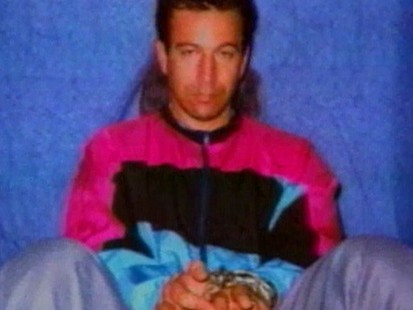
As you may know, today marks the 10th anniversary since Daniel Pearl's death. Pearl was a Wall Street Journal international correspondent, who broke many stories around the world, including an incident where a US airstrike on a supposed weapons factory in Sudan actually hit an aspirin factory. In early 2002, he was sent to Pakistan to search for al qaeda moles in the Pakistani government, was subsequently abducted by one, held for demands from al qaeda, and then murdered by beheading.
When I learned of this act in depth, it was the barbarism of the acts that made me so mad about it. It was a feeling of simultaneous anger and disgust at the act. You know how he was killed? He was decapitated (head cut off), then chopped into ten pieces, and thrown in a ditch someplace in Pakistan. What other word is there for an act like that but pure animal savagery. It's just a horrible thing to do to anyone of any nationality. When I hear about groups like al qaeda carrying out acts like this against people doing their job, I almost understand the kind of guttural anger that drives people like Dick Cheney to want to bomb countries out of existence, or Rick Perry to have criminals executed, even if they are in fact innocent of murders.
It's not that I would ever do these things, or condone them, in any sense, it's just that sometimes, events in the international arena of news sometimes make you so upset that you do get to that point. You do get that level of intense anger, terror, despair about your species, cynicism, a thirst for vengeance. It can be (and sometimes has been) so overwhelming that it scares you. It scares even me how much of that emotion I have sometimes.
This is not the first time I have given issues of an international scope much thought. I came of age, spent my preteens and teens, in a world shadowed by the spector of terrorism. On the morning 9/11 occurred, I was 11 years old, overwhelmed at starting the 6th grade. So it isn't like I've had much choice in what I've become aware of. In past decades, like the 80's or 90's, you could get away with having little or no opinion in international strife and conflicts, because it didn't have a tangible effect on people's lives here in the US. On that Tuesday morning in September 2001, that perception ended abruptly and shockingly.
Since that day, I've felt like there has been a progressively more urgent nature to what happens to people in other countries. So this issue has been on my mind a lot over the years, even though I am still very young. Since I came across this information on Daniel Pearl, I was looking for a way, in my art, to deal with it. I know that won't have an effect, but it will help me express how I feel about this whole issue. Hopefully, just my sharing it with you will have some small effect.
On the one hand, as I said, I do have that anger and fear, but on the other, I do care about other nations, countries and cultures. I want to protect the people of America and the West, but I also don't want to see people on countries like Afghanistan, Iraq, or Iran, shredded, incinerated, then written off as "collateral damage." Sadly, a flipside of our American optimism is this our blindness to the damage our foreign policies, and wars, can cause. If we are an exceptional country, surely we could never kill someone who didn't deserve it. So I get that there are bad people abroad, but I also think we need to take a look at our own soul.
For a while, I racked my brain to try to come up with a way to express this. The phrase "terrorism hurts everybody" went through my mind, but I wanted to come up with a picture that represented it. That is how I express what I find through art best. I wanted to draw up an image that got at the universality of having life ripped from someone you care about. I got the idea to do this drawing.
I was inspired to do this from the Pan Am Flight 103 bombing. On the night of December 21, 1988, the plane, Pan Am 103, was blown up as it was heading from London to New York City. Everybody on the plane (259 people) was killed horrifically, and when the plane hit the ground, it destroyed several houses in the Scottish town of Lockerbie, and 11 people in Lockerbie were killed. The attack was carried out by two Libyan Intelligence agents, one of whom was imprisoned, later released and returned to Libya. There is also good evidence, from official sources, that it was planned within the Libyan government.
Again, the horrible, terrifying way those people were ripped from their lives is gut wrenching. Hearing of it makes it all the more distressing that the perpetrators "got away" and one was sent back home. Again, I had dark thoughts about what I would like do to inflict pain on the people resposible, only to try to take them back soon after. In one account I read, they reported that some christmas presents that the plane was carrying back to the US lay smashed in Lockerbie. That heartbreaking image really stuck with me.
So I decided to make this image as broadly applicable as I could. I wanted it to be about the feeling of a loved one ripped from life. Just the shock, horror, and pain, is something that unites us all. I decided to make this a jarring image of the keychain of a close love falling out of the side of the plane into the darkness. I included the jettisoned christmas present alongside it. This makes it about what terrorism really costs us: people we love, care about, or know. People who don't deserve to be a victim of political or religious hostility. Thus, it applies beyond just the bombing of Flight 103, or terrorism from the Middle East.
It becomes about us all. What do we lose from terrorism? We lose fellow human beings, we lose humanity. By the way, the majority of victims of Islamic terrorism are themselves Muslims. 30 of the victims of September 11th (a full 1% of them) were Muslims, including people on the flights to Los Angeles, and Firefighters, Police Officers, and Paramedics in New York.
Listen to this beautiful video, done by Queen Rania of Jordan, about victims of terrorism who live in the Middle East and pratice Islam.
This inspired me to make this more of a universal statement. That's where I came up with the statement "Terrorism Hurts Everybody." While focusing on this "clash of civilizations" that has claimed many lives, we lose sight of those things in common that give us our humanity. We need, therefore, to reclaim this sense of common experience across borders or cultures. We need to understand that when one act of violence is carried out, someone always suffers, lives with pain for weeks, months, years afterward.
To return to my starting point, Daniel Pearl was killed because he was doing his job. He was doing his work one day, and then he got killed in this horrible way. The same could be said of nearly all other victims of contemporary terrorism. It's just that his job was to highlight goings-on in the world few of us ever encounter. His job may be one of the most crucial in this world.
Thankfully, his death was not for nothing. Now our world is getting more and more interconnected, in an economic sense, in a communal sense, in a cultural sense, in an ethical sense. This is made possible by technology like the laptop I am using right now, and the IPhone I currently own. What is diclosed in Washington DC, can now be passed on to journalists in Europe, and can launch an uprising in the Middle East.
The good thing about this interconnectedness is that it makes it much harder for us to kill indiscriminately. At the same time that technology is bringing us farther apart, it is bringing us closer together. Now our humanity is being brought to bear, as cultures around the world are not as far apart as they used to be. I do not believe this is the end-all-be-all of what needs to happen on Earth, but I do think this is the beginning. The beginning of a journey that needs to happen.
Well, more on the subject of 9/11 in the next post. I was thrilled to finally get to see Extremely Loud and Incredibly Close last Saturday night. I would have blogged about it sooner, but for the last few days, I have been tied up with homework, already, yes. I'll have that for you tomorrow.
See ya, and keep wondering, folks!
Labels:
2001,
2002,
9/11,
Common Experience,
Courage,
Creativity,
Daniel Pearl,
Death,
Flight 103,
Freedom,
Human Interaction,
Human rights,
Just Society,
Justice,
Love,
Middle East,
Terrorism,
USA,
War on Terror
Tuesday, January 24, 2012
Why the Tennessee Tea Party Made a Serious Mistake
Hi there everybody,
Well, it's back to political issues again. I just had to share this little tidbit with you. The reason I am putting this up is because this goes back to the tone of discussion I would like to set. This is a tone of honestly, a willingness to talk about the issue, with all the truths of the people and parties present, however uncomfortable or jarring they may be. To me, this also requires a tone of compassion, of understanding accepting the other, whether you push back on them, call them out, or even take some action against them.
Anyway, the Tennessee Tea Party has demanded to the State's Legislature that, as well as rejecting the Affordable Care Act of two years ago, the history of our "Founding Fathers" and the country's development, be "more truthful," to use their terminology. According to them, the characters of the Founders have been "distorted," treated "unfairly." Huh? Really? Somehow, in Tennessee, of all places, Washington and Jefferson are getting a bad rep. I didn't see that one coming. In all seriousness, I believe that the Tennessee Tea Party here has made a huge mistake (like G.O.B. has below). Here's why.
This re-writing of history (because that's what it is, no matter what anyone wishes to call it) creates a convenient fiction. It promotes a simplistic, almost childlike, view of our history, our heritage, as a country. It just erases facts, important facts about what happened in our past. Don't like some aspect of our past? Just write it out of our textbooks.
This reeks of Ministry of Truth-style renderings of historical knowledge. That's why it is scary to think that one ideological faction could bend, knead, and press history into whatever shape or narrative they wish. If this is the case, how can we have freedom? How could anyone have real freedom? The freedom to explore their world, and reach whatever ideas or conclusions they believe to be right. The truth is, the children of Tennessee would not get the variety of perspective they need to be truly free to see our good work, our mistakes, and ultimately our potential as a people.
A dangerous aspect of this is that the "Founding Fathers" are turned into Gods on Earth, this time at the expense of the non-whites in the America of 1776. The submitted request to the Tennessee Legislature explicitly said this. "No portrayal of minority experience in the history which actually occurred shall obscure the experience or contributions of the Founding Fathers, or the majority of citizens, including those who reached positions of leadership." What this means is that the petitioners here want the curriculum to take out people and incidents which bring to light the white population's oppression of slaves, or their transgressions against the Indians.
Another criticism of theirs is that "the constitution created a republic, not a democracy." I find that interesting. The emphasis here is on the Constitution as it was first ratified back in 1787. They believe that the Constitution must never, ever change from the way it was first conceived of back then. It must never move toward a more democratic framework or expand to "create more rights." Here is the problem with that mindset. In that version of the Constitution, slavery was perfectly accepted, and runaway slaves were even required to be turned in. Slaves had no worth of their own, yet were counted as just three-fifths of a person. Indians were required to be hunted down, butchered and killed. Women were given absolutely no rights outside the home.
The sad truth is that many of the Founding Fathers (with the notable exception of Thomas Paine, who was a real visionary) had slaves of their own. There was, in fact, much concession to the slaveholders in the South, particularly Virginia and Georgia, in the drafting of the Declaration of Independence. The Slave trade was at its height right in the late 18th century, around the time that revolutionary spirit caught fire in what became the US.
The Tea Party people down in Tennessee, as well as Texas and other places, will not accept these parts of our history. When Michele Bachmann intimated that the Founding Fathers ended slavery, she wasn't joking, and she wasn't just being stupid. That is what she, and many other people in this country, do believe, and want to keep believing: that the Founding Fathers can do no wrong. That America can never do anything wrong.
The danger of this belief is that it ignores, or even tries to justify, the very real wrong things done in the name of America. Like the systematic destruction and genocide of the Indians, their ethics, and their way of life. Or the violent uprooting of millions of Africans, tearing apart their culture, and stripping them of their humanity in a land where they were beaten down for the sake of profit and goods in America and Europe. Or the deeply entrenched cultural animosity, across history, towards the French, the Germans, the Eastern European Jews, the Irish, the Italians, the Chinese, and now the Mexicans. If these are ignored, we are blind to our mistakes, and we will be doomed to the same cycle of animosity that has played out since America began to exist.
However, you can't blame the Tea Party people much. Well, you can if you choose, but it would be wrong. After all, seeing the shadow of something you hold so dear is tough. It would be very easy to simply not accept these facts, wish them away and , when given the chance, to simply write them out of history. It seems like you've defeated the issue, the knowledge of the transgression just disappears. However, the animosity does not. People not in the favored race or class will remember it, every time the subtle contempt comes at them.
Facing such unpleasant, even painful truths of our past is a part of growing up. It is a part of viewing our own heritage and society in a mature way. Being patriotic has nothing to do with being blind to our past, or our country being without flaws. It comes from knowing this country, its victories in the quest for truth, justice, freedom, and its downfalls. To me, it's similar to how you would love a member of your family. You would not pretend they were perfect, you would know they had flaws, but care for them, and help them heal anyway.
Paradoxically, it becomes easier to live with and love somebody when you don't have to pretend they are perfect. This goes the same with the United States of America and its people. Like I said before, I think there is a discussion that needs to happen concerning race and class history in this country. We must confront the ways, individual and systemic, intentional or unintentional, that we have marginalized and ignored the poor and the immigrants. This requires us not to blame each other excessively, but rather, to see our abuses for what they have been, in all that it entailed. We must see the dark flip side of the early prosperity of our country-the campaign against the Indians' culture and the slave trade, for all the suffering they caused.
Recently, I have been reading A People's History of the United States by the late Howard Zinn. It shows, through extensive and unknown research and documents, how the beginning of the United States was not a 100% new, radical declaration of the freedom of humanity, but a continuation of many cultural defects of old-racism, sexism, slavery, contempt for the "inferior" (i.e. native) cultures. It is absolutely required for a comprehensive understanding, what is contained in it.
I think that this also misses something, though. There are two strains of cynicism; one says that because we are the "right" ones, whatever we do must therefore be right. the other says that because what you see is not as pure, wholesome and clear cut as it seems, real transcendence is not possible, and it is pointless to try to achieve it. These are both ideas you must be careful of. I think the Tennessee Tea Party is trying to shut down this type of discussion at the very time it is most needed. Thankfully, there are a small number of people who realize that while we do not live up to our own mythologies, we nevertheless have our drives of compassion and a longing for connection.
Wow! That went on way longer than I expected it to. I always promise myself, Okay, this is just gonna be a short entry. Then, sure enough, it just comes out, and then I've written several paragraphs. Thanks for reading. I hope you bear with this, even though it can be hard to focus on these long entries. So, what do you think? Does learning about, for instance, our history with slavery scare you, or upset you? Do you believe that it wasn't really as bad as they say? Or were some of your ancestors perpetrators, or victims, of our country's racial or class divides?
See ya, and keep wondering, folks!
Saturday, January 21, 2012
Citizens United: Two Years Later
Hi there everybody,
I remember very clearly the week of January 21, 2010. I remember, first, because it rained ferociously all that week, from Monday, the 18th, all through the next Friday, the 22nd. It rained so hard that my college's student union, that it sustained some rain damage and had to be closed for the next three months while it was repaired. The second reason is that on that particular Thursday, the decision on Citizens United v. Federal Election Commission came down. I know I've been on a political kick the last two days, but stick with me here, and I'll tie it back to creativity.
Now, I could bore you right out of your mind with the Supreme Court jargon and legalese (read this if you're in the mood), but essentially, what that verdict said was that money given to campaigns constitutes free speech, therefore, any restriction on it would be unconstitutional. The ruling went farther to declare that all corporations and unions have the same legal right to spend unlimited amounts of money on campaigns as individuals do. This ruling derives from ambiguities in rulings going as far back as 1886. The question at stake here pertains to the rights of legal entities, like corporations, under the 14th Amendment.
I remember that this was a day when I was, truthfully, very scared for the future of our society. I don't mean this in a rhetorical way, I mean, very literally, that I was scared. I knew that what this ruling was really meant to do was undo all of the rules to limit the influence of money in decision-making. This would make an already-atrociously bad situation much, much worse. I didn't know how much our society might corrode. To me, on that day, and the day after, it looked to me like there was a very real chance that we could go the way of those European countries in the 30's.
I saw this newscast on that night. At the time, I felt like "This is it. Now we're gonna be on our way to a police state." I felt this because the big corporations would give the money to the uber-authoritarian political leaders, who would pass laws making the monolithic power of corporate America invincible, with anyone with any shred of power having to kiss their rings, and any small criticism punishable by God knows what. This was a classic case of worst-case scenario thinking. Like the man on the TV said "Who's gonna stop them now?"
Looking back, the rhetoric of this newscast seems hyperbolic, with the host, Keith Olbermann, infusing as much drama into it as possible. He does raise points that need to be recognized, it is just how he raises them that gives me pause. However, the changes since that infamous ruling, sanctioning any and all financial corruption, have been more subtle. Perhaps they, the financial powers, still couldn't afford to be too blatant about cashing in.The process of purchasing our "leaders" has not occurred in one fell swoop, but rather, as a decades-long process. One that started long before Citizens United came up for argument.
In America, over the years, the "private sector" has gained this ring of absolute faultlessness to it. People who praise it often evoke the image of the small business owner, toiling with great integrity in the store down the street. They invoke legendary names like Henry Ford, or more recently, Steve Jobs and Bill Gates, or even Sam Walton, owner of the first Wal-Mart in Bentonville, Arkansas. What they neglect to mention are these things. First, that as more power and clout amasses among the wealthy, there is much less room for people to make it to those ranks, or just to realize their dreams. Second, too heavy an emphasis on competition diminishes our link with our common experience.
Why would I be saying this? In the current model we have, a corporation's sole purpose is to continue making money for its shareholders. Because of this, they have to do anything to remain profitable. Once a company is chronically un-profitable, it is subsumed. That's the nature of "competition" and "free enterprise" that are so above scrutiny or criticism, of any sort. Look at how much power and influence corporations hold over our society. That's why I included the drawing of the various logos at the top. Big corporate names are found all over our buildings, cities, arts centers, even sports arenas. Those seldom have the names of Athletes or folk heroes anymore, just corporate sponsors, like "Home Depot Center," or "Goldman Sachs Stadium."
One question I must ask here is What about the people who worked their asses off in that not-profitable company? That's where the shadow of corporate society appears.
In fact, caring for workers could take away from the corporation's ability to make money. If that hurts profitability, the company will just have to make those people live on less. That means workers will have to work longer, go through more stress, for the same or less in benefits. In this competition, their work no longer is anything of value, just a means to the end of profitability on the company's records. Another means of getting to that end would be to downsize them and uproot those people's lives. This competition is beginning to take its toll.
The need to profit or die in work necessitates companies being as reckless with risk as possible, whether it's a big bank with new financial instruments, or an energy company with new resources for drilling. This means the risks have to be downplayed. This is where things get hairy. Which would be more cost-efficient to do? To, for instance, install a filter in a refinery that cleaned out any pollutants in the smokestack? Or to just ship the material to some body of water to be dumped? Then, if a bunch of people nearby mysteriously begin getting sick and dying, what do you do? Would a good option be to spend money, to elect a senator or governor, to write a law letting you manufacture, and pollute, to keep making money and staying profitable? Probably, even if that means employees have to be short-changed, or the world polluted, or people getting sick or dying.
I say all this to emphasize this point: corporations do not suffer. They do not have to work on poverty wages. They do not have to live in fear of starvation, sickness, or death. They do not get sick, they do not die, and they will not be imprisoned or executed if they steal or kill. I do not say this do disparage free enterprise, or business, or competition. Realize, though, that said concepts are, in many ways, blind to the hardships of our lives. There is nothing wrong with these things. There is nothing wrong with cells in your body multiplying. However, when this gets out of control, the body can get serious, or deadly, cancer.
I believe that we need some balance between the government and business sectors of this country. My point here is that the motive to profit and compete to make the best product needs to be in check. We must have a public entity to encourage unity, collaboration, and to keep businesses working for the good of their clients. They need to be kept from buying off their cops.
Okay, so the profit motive can lead to destruction, but what should we do? In addition to the current model of profit for the shareholders, there need to be more people to whom the corporation is accountable. For instance, the employees, and all the stakeholders in a company's well-being.
Recently, I found this logo in a bike store in Downtown Long Beach. Underneath, I found a charter entitled "Declaration of Interdependence." It listed the missions of a "b" corporation,which spoke beautifully to what we need in our enterprise arena. A model based on workers' needs need not decrease freedom, it could increase the amount of freedom and well-being in our lives.
There have been many established enterprises in which the workers are the stakeholders to which the company much answer. In Spain, there are a number of such companies that operate under the title "mondragon." My brother just brought me back a book from Argentina called Sin Patron (Without a Boss), in which workers in a factory walk out to form a worker-owned collective factory.
In order to accomplish such things, we need to begin to view life in a more creative way. If the employers and the employess were in closer proximity, it would be so much more difficult for the former to exploit the latter when they needed to boost profit margins. All this entails shifting the focus from sole profit and advantage to the meaning of our work. This purpose (i.e. whatever the enterprise is set up to do) must become something that we do first, because it serves a need, and second, because it is what we enjoy. This I believe, would change the nature of what it means to go into business, or to work. This is not the end of my discussion on these subjects, but the beginning of a conversation that will continue, with the help of this blog.
See ya, and keep wondering, folks!
Friday, January 20, 2012
Visceral Anger
(Above photo from the Washington Post)
Hi there,
Well, everyone, today I'd like to talk about some things that make me angry, and how I'd like to get through that anger. I didn't want to get involved in horse race politics, for two reasons. First, because I knew that might alienate some people if I were to talk about why one party, or one ideology was the greatest, while the other was just deplorable. This would invavlidate the readers of that party or ideology, which I don't want to do here.
Second, this blog is called Art From The Heart, which evolved from the previous Daily Reeder ( a much more explicitly political blog, but still more self-expressive than your average blog on these issues), and part of the Fuzz Memorial Project, which is still in its conception stages. So for these issues, I only want to talk about them in so far as they relate to my art, or others' art, or creative expression, particularly as a means of enriching humanity.
I also refuse to get totally swept up in this Presidential Race. You might realize that I have a certain position, however, I refuse to simply plug for any national party, or political ideology. I will tell you what appeals to me, in some cases, about it, but I take great pains to see the drawbacks for what they are, and keep it at arm's length. Just the other day, though, something crossed the line with me. This is something that I need to talk about now. It was a comment Newt Gingrich made at the South Carolina debate this past Monday.
Something about this set me off. I knew there was something bad about Newt, but the totally smug, egotistical "Let me tell you the facts of life, because you don't know any better," attitude was what was totally unjustified. Juan Williams made a totally valid point here. The epithet of "Food Stamp President," and saying that poor kids should "mop the floor and clean the bathroom," to earn money are absolutely insults. That is an attack on the poor, but especially the black segment of the poor. To add insult to injury, this debate took place on Martin Luther King Day.
You can see the incredible disdain on Gingrich's face as Williams asks him that. Williams at least brought this fact in the discussion, setting it up as a softball, and Newt spat all over it. By the way, what Gingrich is saying, when he says "own the job," is "be a janitor, because that's all you'll ever be good for, is cleaning rich kids' toilets." Don't rely on those goddamn Union workers, who dare to bargain for just a passable wage, instead, have those lazy poor kids pulled out of school, to work slaving away at the feet of the wealthy kids, because that's the only skill they'll ever be good for. They're just so fucking lazy that they need to work.
Now, if a kid wants to be a janitor, that's a different story. A child should have every right to pursue the type of work they want, be it rich or poor. So a poor child should have the right to be a janitor, if they want. They should also have the right to go to school, to get into college, and to get into the field the want, whether it's from a degree in engineering, economics, architecture, theater or communications. I believe that this not just better for the kids going into these fields, it is better for society itself, precisely because these kids are happier at their work. I elaborated on the importance of finding work that gives you joy yesterday. According to Newt Gingrich, and many others, these poor kids just "come from lazy families," and "need to learn to work." They need to work like children in China work in toxic factory settings, like this one.
The sickest part of this whole episode is how nuts the crowd went with applause. Listen to how absolutely disdainful Newt Gingrich was, in his speech, about these kids in the families. His little point about "those kids went and got jobs when they were little, why are you being so coddled?" was another wrong point. All kids are not meant to be forced to go to work, under pressure, when they are 10 or 11 years old. These young children should be given the time, the space, and the resources to grow, and then they will work more effectively for their employers.
None of this mattered though, to the people in that auditorium. It was that horribly sick mass cruelty toward the poor, and those absent from this discussion that really put this over the line. This amount of riotous applause are unprecedented for a debate. It is literally sickening to watch so many people approve so loudly of such a deplorable statement. This morning, when I was getting ready to do this post, my stomach was literally turned.
This type of anger reminded me of something else I heard that made me really mad. Remember when Sarah Palin first came on the scene, and gave that big Convention speech when she was nominated? There was this snide, spiteful line she threw out against community organizers.
This also got a huge line of applause, and conservatives continue to mock, belittle, and put down the work of community organizers. The most galling thing about this was, practically nobody in the media, not even liberals, talked about this for the rest of that campaign cycle. It was like nobody else noticed or cared that this insult had taken place. Against people with too little clout to defend themselves, no less.
All anyone seemed to be talking about was how provocative Sarah Palin was, or she was a brave feminist, or Look at how stupid Sarah Palin is! This last line was what frustrated me about the liberals. Call her out! I would always think to myself. All this talk about this shiny new woman, and since she's a woman, anyone who dares object is an evil misogynist. All the focus on her, none on the people she so gleefully pillaried. The only thing worse than an injustice, is an injustice that is not recognized as such.
This brings me back to Newt in this debate. There is also the subtle context of racial animosity against the poor in the inner city, many of whom are black. This was in South Carolina, where unemployment is much higher than the national average. It is sad to see, but many poor people in this country, who are victimized, marginalized, turn on each other. So poor whites in South Carolina blame those poor, mainly black, families who "have no history of work," as Gingrich put it.
I do not believe that Newt Gingrich, or the Republicans, are racists. There is a dialogue that needs to happen in this country around race and ethnicity. When you use the word racist, everybody shuts this discussion down, and they retreat into their defensive modes. So I hesitate to throw that bomb. I don't think it would be accurate to call them racists. What I believe Newt, and the others, are doing here, is appealing to the worst parts in the audience members.
This part in all Americans has been pushed numerous times, particuarly in the last few years. All this job loss, job insecurity, money and insurance insecurity, deeper and more terrifying law enforcement power, have been making everyone crazy, even (or, perhaps, especially) me. The economy is still on shaky ground, and just the threat that the economy could turn South again, would mean people could lose their jobs, their homes, their health resources, even perhaps their life, if they get sick.
So those people in the auditorium in South Carolina probably have lots of anger, and anxiety. Here, Newt is challenged on one of his points on "those lazy poor kids," and Newt smacks down the guy who asks him if this could be offensive. This forcefully confirms the order they have been given, that "those people on food stamps" need to just "get to work." The punishment of these out-groups supports the powerful, leader-type presence, like the order that "the Jews are enslaving us," or "the blacks are an inferior race," to borrow two historical examples. They are never shown that "those people" have more in common with them than they realize.
The media is constantly talking about the traits and doctrines that divide us. Races, economic strata, political ideology, these are all ways that we are pitted, sometimes violently, against each other. We see the other groups as having no human worth, or redemptive qualities. To us, the others are just evil, through and through. While we hate them, we are also terrified of them. This pattern existed in the minds of those at the debate, with the inner-city and black poor.
What I have come to realize is that most politics, journalism, and so forth is devoit of humanity. There is mainly a framework of us, the enemy, and how to maximize good for our side, and shut the others out. The downside of this competitive political arena is that there is little room for people to come together around a collaborative solution. It has to be this side, this party, this nation wins, and the other must be ignored. People's experiences of poverty, war, terror and all the rest are left out. In this way, our societal landscape is reduced to teams jockeying for an advantage.
This robs us of our humanity. It must be noted that while those of us for reforms have our deep, rich experiences of life, so do those working against us. Recognizing this is, in part, what distinguishes this country from the more despotic ones. We must also realize that our "leaders" (be it Newt Gingrich or Barack Obama) have their small human experiences too, although these might be darker. They had to get rid of these sides of themselves in order to make it to the top. This makes it easier for them to manipulate, shut down, pit their groups against others, and be so insincere.
This is part of why Gingrich uses these code words that are so divisive. In the world of Gingrich, you are either a "virtuous, Christian job creator," or an "elitist liberal," or one of the "poor that won't work, like you and I." In order for our society to recover, we need to be truthful about leaders like Gingrich, Obama, and others. We must realize that they are ultimately interested in their prosperity. We need to see each others' faults and shortcomings, and those in ourselves, and then accept them, or point out and correct the aggregious flaws.
I realize how powerful this visceral anger can be, particularly when you feel so right, and they are so wrong. I used to get very impulsively angry, when I was being abused. I would yell, scream, swear, sometimes hit people. I knew that my impulsive anger would make me do something I would regret later, even though it was so strong. I have been working on a way to say exactly what is making me mad, even as I recognizeand honor the other. This is a tough thing to do, but I am ambitious about this goal.
In case you get mad, listen to this video:
This is from the little-known 2003 comedy Anger Management, which starred Adam Sandler and Jack Nicholson. Maybe we need some national campaign of anger management, so that we can solve our serious crises without losing our shit. Maybe that's what we can call the program. When you get really mad, I have found that it is helpful to have some small to do, like take a few deep breaths, to focus your mind. I wanted to boldly, candidly, but relatably face this anger that I used to avoid, if I could. I have turned my creative energy toward the things I previously tried to stay away from, like my deep anger. Your creative lifestyle is much more potent, and much more important, when focusing on something that dogs at you. Thanks for listening.
See ya, and keep wondering, folks!
Subscribe to:
Posts (Atom)